Revibikes Cheetah

BikeRide finds and shows you the best prices of the bikes you want to buy. Prices constantly change and it’s impossible to compare them all yourself.
We search for prices on over 120 bike retailers to guarantee that we find the lowest prices – to save you time and money.
It’s a promise we stand behind: If you find a lower price on a bike elsewhere, we will sell it to you for 10% less. For example, if you find a bike for $480 that we have listed at $500, we will offer you to buy it for $432 through BikeRide. The bike must be the same color and size, sold in the US and not include the use of a coupon.
If you find a lower price, email us at [email protected] with documentation of the price. We’re committed to making sure that the cost of a bike does not keep you from cycling!
Facts
Summary of Reviews
We have read all expert and user reviews on the Revibikes Cheetah. In summary, this is what cyclists think. Published Oct 15, 2025 by Nick Koleszar.
7 reasons to buy
- The Cheetah has a 750W motor, 840Wh battery, and cadence sensor. The Cheetah Pro has a 1,000W motor, two batteries totaling 1,440Wh, and torque and cadence sensors.
- The Cheetah is user-configurable for all three e-bike Classes, and can be unlocked for higher speeds.
- A second 720Wh battery can be purchased for the regular Cheetah.
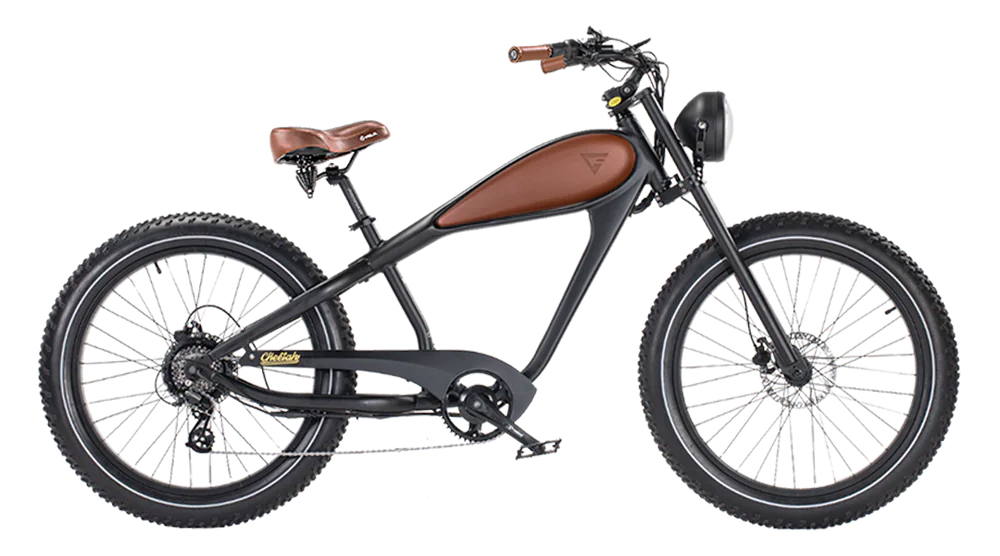
- The Cheetah's retro motorcycle look is a hit with reviewers.
- The Cheetah Pro comes with lights, a cargo rack, and fenders.
- Revibikes sells an air-spring suspension fork for this bike.
- Owners can install an Apple AirTag inside the included bell.
11 reasons not to buy
- The website, video tutorial, and user guides are incomplete, and they list inconsistent specs and setup instructions.
- The Cheetah Pro’s 1000W motor doesn’t comply with US e-bike classifications, making it illegal in most jurisdictions.
- Testers of the standard Cheetah report delayed pedal assist activation and reengagement.
- Experts say the feet-forward riding position makes pedaling inefficient.
- The gearing is too low to pedal effectively at higher speeds, according to reviewers.
- The base Cheetah has no rear light, rack, or fenders.
- This bike comes in only one size, and it's very big, making it impractical for smaller riders.
- A taller rider has to fit an aftermarket stem riser to provide clearance for his knees when pedaling.
- One reviewer complains that the 750W Cheetah only reaches 23mph.
- Testers bemoan the noise from the long chain smacking the chainguard and chainstay.
- The Cheetah's batteries are proprietary and can’t be removed for charging off the bike.
Bottom line
The Revibikes Cheetah is a retro moto-style e-bike, available in two variants: 750W or 1000W (Cheetah Pro). Only the 750W Cheetah is tested. Reviewers praise the laid-back riding position, easy power, and comfortable ride on smooth pavement. However, the bike doesn’t reach the stated top speed, the cadence sensor is laggy, and the chain is very noisy over bumps. The Cheetah might make a cool commuter, but its size and weight complicate parking and storage. Even for buyers who love its design, the Cheetah’s value is questionable at this price point.Expert Reviews
76/100 based on 4 rated expert reviewsRevibikes Cheetah Pro Review: One Feature Makes This Bike Stand Out
The Cheetah is the Revibikes’ flagship e-bike, and in this review, we’re testing the dual-battery Pro version.
The Cheetah Pro is impressive on paper, with dual batteries, a motor with a claimed peak output of 1,700W, and an advertised top speed of 33mph. Revibikes also says the bike will cover 100 miles on a single charge.
These are big claims, and we will put each of them to the test and compare this bike with similarly specced models.

Unboxing
Our test bike arrived with mirrors, a cover, a phone mount, a pump, and a lock, but the included accessories can change, so check the listing before purchase for the current package on offer.
Assembly involves installing the handlebars, mounting the front wheel and brake caliper, connecting the cables, and checking all fastener torques. Frustratingly, the manual doesn’t include torque values for the fasteners or instructions for installing the front brake caliper.
The front wheel also doesn’t come with a safety washer to prevent the axle from falling out if the bolts loosen. The Cougar Pro we reviewed recently has these, so I’m surprised the Cheetah doesn’t.
Bike Description
The Cheetah Pro is Revibikes’ most expensive model, and it looks the part. It’s a long and wide motorcycle-style machine with a total length of 83″.
Revibikes says the Cheetah fits riders from 5’2″ to 6’3″, but the 35″ minimum saddle height means shorter riders may struggle to mount it. The 400lb payload capacity and long rear rack give the bike plenty of scope for carrying gear.
The Cheetah Pro’s most notable upgrades over the standard build include an extra battery, an adjustable 130mm inverted air suspension fork instead of a coil fork, and a more powerful motor.
The Cheetah Pro’s electrical system ships at 48V, but this can be increased to 52V in the advanced settings. The claimed torque is 115Nm, and Revibikes advertises a top speed of 33mph.
Pedal assist uses a combined cadence and torque sensor with cadence-only, torque-only, and hybrid modes available through the advanced menu. The throttle is a twist grip.
The two 48V batteries provide a total capacity of 1,440Wh. Both batteries charge simultaneously through one port, and this takes around six hours. The lower battery is removable, but the upper is fixed to the frame.
The 3.5″ color LCD display is bright and easy to navigate. The advanced menu goes further than most bikes I test. System voltage, e-bike class, speed limits, and PAS output for each of the five assist levels can all be adjusted through the display. The display can also be set up to unlock with a PIN code or the included NFC cards.
The Cheetah Pro rolls on 4” Kenda Krusade tires on 26” aluminum rims. The drivetrain includes a 7-speed Shimano Altus derailleur with an 11-28t cassette. The brakes are four-piston Tektro hydraulic discs with 203mm rotors.
The 720mm cruiser bars have faux leather grips that match the Velo saddle. Alongside the rack, Revibikes includes a front light, a rear light with brake activation, turn signals, aluminum fenders, and a kickstand.
Lastly, the Cheetah Pro has UL 2849 and UL 2271 safety certifications and an above-average IPX6 water resistance rating.
Riding the Bikes
The Cheetah Pro rides exactly as expected. At 105 pounds, this large, heavy machine is designed to be ridden under power. The bike feels well-made, and I had no concerns about the build quality during the testing period.
It’s a challenge to move the bike without the motor running. Under power, that changes. The motor delivers controlled power that gradually ramps up. In Class 3 mode, the throttle caps at 20mph, and, in PAS level 5, the bike cruises comfortably in the low-to-mid 20s.
By switching to Off-Road mode and bumping the system voltage to 52V, I reached 32mph from throttle power, just short of the advertised 33mph. This also shaved one second off the acceleration test results from Class 3 mode. The performance improvement was noticeable but not dramatic. The Cheetah Pro is fast and fun, but don’t expect it to feel like a rocket.
As always with bikes that include unrestricted modes, check the local laws before riding on public roads or trails.
I rode for several hours for the range tests and found the seat and riding position comfortable throughout. I pedaled on and off through range testing without any problems, with ghost pedaling only noticeable around 24mph.
Unlike other motorcycle e-bikes with fixed bench-style seats and uncomfortable pedaling geometry, the Cheetah Pro’s adjustable saddle height and 7-speed gearing mean sustained pedaling is comfortable. The brakes also performed well, with good modulation and consistent stopping power.
The air suspension fork smooths out bumpy pavement, and being able to tune the air pressure to match rider weight makes a real difference to the ride quality. The rear end is a different story. The sprung saddle helps dull minor road chatter, but anything rougher than that is transmitted straight through the frame. In my opinion, this bike is best kept to pavement and smooth gravel or dirt paths.
The Cheetah Pro’s long wheelbase and wide tires give it a stable, planted feel at speed, but the weight and length make it a handful in tighter turns, even on pavement, so I wouldn’t take this bike on technical off-road terrain.
During testing, I found the battery meter to be unreliable. Mine held at 100 percent for the first 11 miles of the range test, then both batteries dropped quickly to 76 and 79 percent. After that, both discharged in a fairly predictable pattern, dropping 1 to 3 percent at a time. Near the end of the ride, the motor cut out while the display still showed 8 and 10 percent remaining on each battery, so it’s important to factor that in to avoid having to pedal this 105lb machine for several miles without assistance.
The hybrid sensor mode worked well throughout the range test, reading effort accurately and delivering the right amount of assist. The torque and cadence sensors can also be used individually.
Pros
Range
Using Class 3 mode and max pedal assist, the Cheetah Pro lasted 41 miles, topping the Cougar Pro, the Puckipuppy Labrador, the HeyBike Hero, and the Mokwheel Obsidian in the same test. In our PAS 3 test, it lasted 55.6 miles, exceeding all comparison bikes. If range is a priority, the Cheetah Pro’s dual batteries and 1,440Wh deliver real-world results.
Ride Tuning
The advanced menu gives excellent control over the ride, allowing riders to tune the pedal assist output of each PAS level, switch between cadence, torque, and dual sensor modes, and set the system voltage to 36V, 48V, or 52V. Class selection is also easy.
Comfort at Speed
For buyers looking for a large moto-style cruiser for pavement and smooth off-road paths, the Cheetah Pro is a solid option. The long wheelbase, wide tires, and tunable air fork combine for a stable, planted ride at speed. The relaxed riding position and sprung saddle kept me comfortable throughout testing.
Cons
Hill Climbing
The Cheetah’s performance in our hill tests doesn’t match the claimed power and torque. The Cheetah Pro climbed our gradual hill in 2:36 and our steep hill in 2:26, falling behind all of the comparison bikes in both tests. This shows the value of real-world testing over buying a bike based on the manufacturer’s specs.
Battery Indicator
The battery meter is unreliable at the start and end of a ride. Mine held at 100 percent for 11 miles before dropping sharply to the mid-70s on both batteries. Near the end of the range test, the motor cut out while the display still showed charge remaining on both batteries. The mid-ride readout is fine, but this irregularity causes some range anxiety.
Test Results
Climbing Test 1 – Gradual Hill
The Cheetah Pro climbed our gradual hill in 2:36, the slowest of all five comparison bikes. The Cougar Pro finished in 2:24, the Puckipuppy Labrador in 2:19, the Mokwheel Obsidian in 2:21, and the HeyBike Hero in 2:06. This result makes me doubt the claimed power and torque.
Climbing Test 2 – Steep Hill
On the steep hill, the Cheetah Pro finished last again, taking 2:26. The Cougar Pro finished in 1:52, the Mokwheel Obsidian in 2:09, the HeyBike Hero in 2:12, and the Puckipuppy Labrador in 2:19. The motor clearly struggles to overcome the bike’s high weight.
Acceleration
The Cheetah Pro accelerated from 0 to 20mph in a lengthy 11 seconds under throttle and 9 seconds using PAS in Class 3 mode. Switching to Off-Road mode at 52V shaved one second off each result. Using PAS, the Cougar Pro and Mokwheel Obsidian each hit 20mph in 6 seconds, and the Puckipuppy Labrador in 7 seconds. Once again, the Cheetah Pro’s performance is the weakest of our comparison bikes.
Range Test 1 – Class 3 Mode, PAS 5
What it lacks in climbing speed and acceleration, the Cheetah Pro makes up for in range. Using Class 3 mode and PAS 5 the Cheetah Pro covered 41 miles with 1,652 feet of elevation at 17.4mph. That tops all four comparison bikes: the Cougar Pro at 38.08 miles, the Puckipuppy Labrador at 30.56 miles, the HeyBike Hero at 28.42 miles, and the Mokwheel Obsidian at 25.4 miles.
Range Test 2 – Class 2 Mode, PAS 3
Using PAS 3 in Class 2 mode, the Cheetah Pro covered 55.6 miles with 1,847 feet of climbing at 14.3 miles per hour. The Fiido T2 was the closest competitor at 51 miles. The Cheetah Pro’s range at moderate assist levels is excellent, making it a good choice for buyers who prioritize distance over speed.
Brake Test
The Cheetah Pro stopped from 20 miles per hour in 17.5 feet, a strong result that demonstrates that the brakes are adequately specced for such a heavy e-bike.
Conclusion
So, does the Cheetah Pro deliver on Revibikes’ promises?
When it comes to range, yes. 41 miles at high assist and 55 miles using moderate assistance are strong real-world results that exceed most competing models. For riders who want to cruise for long distances on a moto-style bike, the Cheetah Pro delivers.
A highlight from my time with the Cheetah is the adjustable air suspension fork, which makes a notable difference to ride quality. The brakes also perform well, and the drivetrain provides a practical benefit on this bike, unlike most moto-style e-bikes, which have fixed seat heights. The ability to adjust saddle height means pedaling for long periods is comfortable. The degree of customizability of motor performance is another benefit of this bike that’s worth repeating.
On the other hand, the motor’s performance falls short of expectations. Despite good specs the the hill climbing and acceleration results are unimpressive. The 105lb weight is likely a limiting factor, but riders who value rapid acceleration and hill climbing want to consider a different moto-style e-bike.
All things considered, at $2,899, the Cheetah Pro is a reasonable option for those who want a comfortable, moto-style cruiser with serious battery range.
Score Breakdown
- Build quality: 80
- Performance/Innovation: 80
- Design: 80
- Ride quality: 75
- Price/Value: 85
Overall: 80
Detailed Specs
Electric Bike Class: Class 1, 2, 3, Unrestricted
Warranty: 2-year limited
UL Certification: UL 2849, UL 2271
IP Rating: IPX6
Total Weight: Claimed: 105lb – Actual:
Motor Brand: Revi Bikes
Motor Type: Rear hub
Motor Nominal Output: 1,000W
Motor Peak Output: 1,700W
Max Torque: 115Nm
Batteries: 2x 48V 15Ah (1,440Wh)
Range Claimed: 100 miles
Range Tested (PAS 5, Class 3): 41.02 mi – 1,652ft. – 17.4mph avg.
Range Tested (PAS 3, Class 2): 55.62 mi – 1,847ft. – 14.3mph avg.
Top Speed: 32mph
Throttle: Twist
Pedal Assist: 5 levels
Sensors: Cadence and torque
Charger: 48V 5A
Charge Time: 6 hours
Display: Color LCD 3.5″
Frame: Aluminum
Fork: Inverted air suspension, 130mm travel
Brake Levers: Tektro hydraulic
Brake Calipers: Tektro 4-piston hydraulic
Brake Rotors: 203mm
Crankset: 44t
Derailleur: Shimano Altus 7-speed
Shifter: Shimano Tourney TX50
Cassette: 11-28t
Rims: 26″ spoked aluminum
Tires: 4″ Kenda Krusade
Fenders: Full coverage aluminum
Lights: Headlight, taillight, brake activation, turn signals
Grips: Faux leather
Saddle: Velo faux leather
Pedals: Aluminum platform
Handlebar: 720mm layback cruiser
Kickstand: Yes
Payload Capacity: 400lb
Rack Capacity: 45lb
Geometry Details
Recommended Height: 5’2″ – 6’3″
Seat Tube: 17″ (432mm)
Reach: 12.8″ (325mm)
Stack: 28.14″ (715mm)
Stand Over Height: 26.5″
Virtual Top Tube Length: 19.5″
Min Saddle Height: 35″ (889mm)
Max Saddle Height: 40″ (1016mm)
Wheelbase: 57″ (1448mm)
Watch This before Buying the Revi Bikes Cheetah! 500-Mile Update Electric Bike Review
Revi Bikes Cheetah Review
Coolest E-Bike to Date, Stylish Cruiser | Revibikes Cheetah
Revi Cheetah Plus: Retro Rides, Campus Vibes!
Rankings
Best Electric Bikes
Bike Comparison
Forum Discussions
-
1 day ago
-
1 day ago