Eahora Juliet Pro II Review


Our verdict
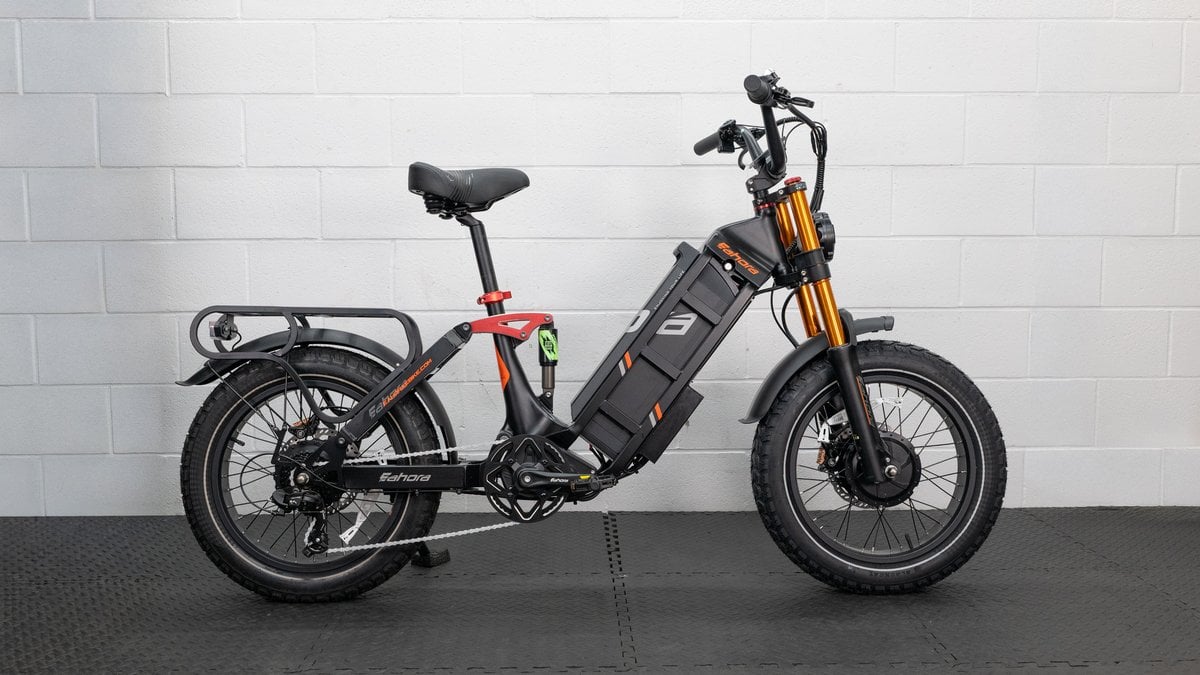
The Eahora Juliet Pro II is a 148.4 lb dual-motor moped-style e-bike that delivers impressive power and range. It reached a GPS-verified 43 mph, hit 20 mph in 5 seconds on the throttle, set the fastest time we have recorded (1:31) on our gradual hill, and covered 69.35 miles at a 28 mph cap. Weak suspension, poor stability at high speed, and conflicting specs count against it. It also lacks UL certification and won't meet e-bike rules in most places, but for a fast, long-range machine, the test results speak for themselves.
Pros
- Fastest gradual climb we have timed: 1:31
- 0–20 mph in 5 seconds with the throttle
- 69.35 miles at a 28 mph cap
- Hits a GPS-verified 43 mph
- Stopped from 20 mph in 16 feet
- Bright headlight: 1,266 lux at 15 feet
Cons
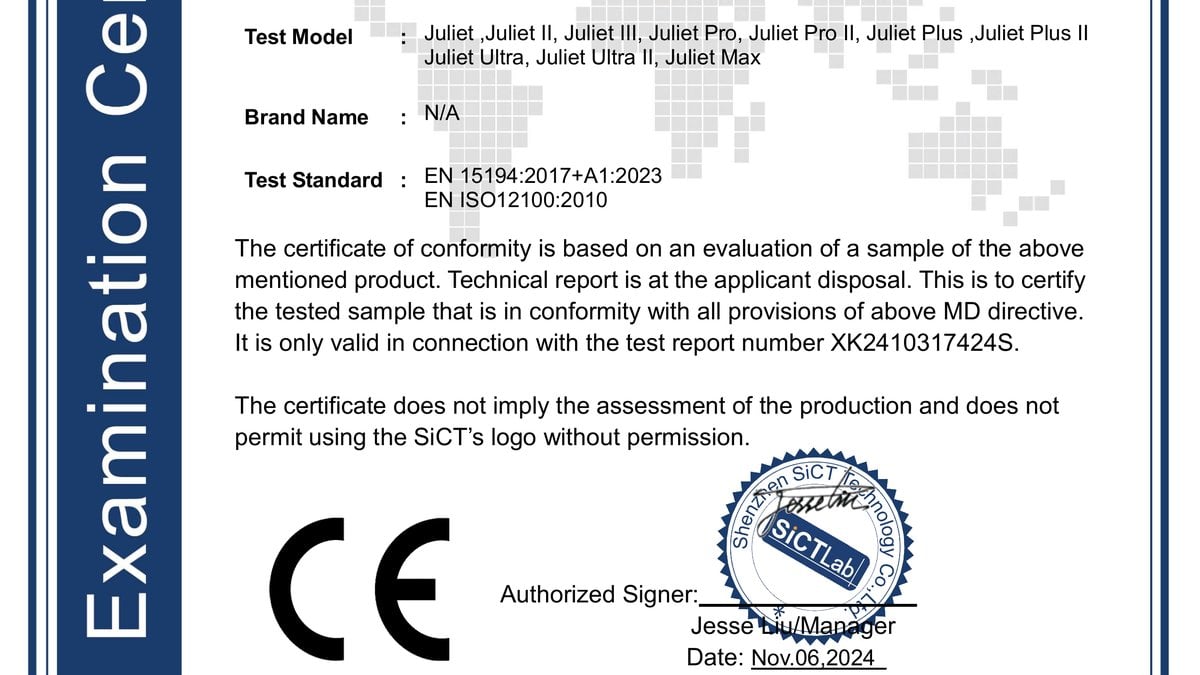
- No UL certification, only CE
- Doesn't meet e-bike classification in most places with its 4,400W
- Heavy at 148.4 lb
- Basic suspension: the rear bottoms out
- Loses composure in the high 30s
- Conflicting specs and the wrong owner's manual
Claimed vs. measured
Eahora sells the Juliet Pro II on its power, its range, and a 43 mph top speed. Here is the spec sheet next to what we measured:
| Claim | Eahora says | We measured | Verdict |
|---|---|---|---|
| Top speed | 43 mph | 43 mph (GPS) | ✓ Verified |
| Weight | 148.15 lb with the battery | 148.4 lb as shipped, just 0.2% difference | ✓ Verified |
| Range (throttle-only) | 60–65 mi | 69.35 mi at PAS 5 and a 28 mph cap, mostly on the throttle | ✓ Beats the claim |
| Charge time | 8–10 h | 10.0 h at the fastest (70Ah ÷ 7A), the slow end of the claim | ✓ Verified |
| Saddle height | 32.6"–40.5" from the ground | 32.3"–37.6", 2.9" lower at the top | ✗ Misleading |
| Fits our tester (6'0", 33" inseam) | 6'0" is inside the 5'7"–6'4" range | Short of full leg extension with the seatpost at its highest | ≈ Close |
| Claimed height range accuracy | A 9" span of rider height (5'7"–6'4") | 5.3" of saddle-height adjustment: (9" − 2") ÷ 5.3" = 1.3×, inside our 2.0× limit | ✓ Verified |
✓ = within tolerance · ≈ = close, with caveats · ✗ = fails our tolerance. Tolerances are defined in our test methodology.
Comparison
The most similar e-bikes we have tested first-hand, compared side by side using our own measurements and test results where possible.
This bike Eahora Juliet Pro II |
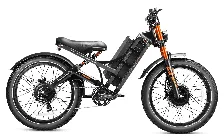 Eahora Romeo Ultra II |
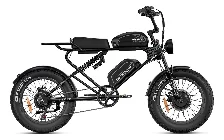 MEELOD DK300 |
 Puckipuppy GoldenR |
|
|---|---|---|---|---|
| BikeRide Score | 76 | 65 | 75 | 73 |
| Best price | $1,999.99 | $3,549.00 | $999.00 | $1,999.00 |
| Motor | Two 2,200W hubs (2,600W peak each) | Two 2,500W hubs | Two 750W hubs | 750W rear and 500W front hubs |
| Battery | 4,200 Wh | 4,800 Wh | 1,920 Wh | 960 Wh |
| Range tested (max assist, 28 mph) | 69.35 mi mostly throttle | 72.75 mi | 33.25 mi | 29.61 mi |
| Efficiency (max assist) | 60.6 Wh/mi | 66.0 Wh/mi | 57.7 Wh/mi | 32.4 Wh/mi |
| Gradual hill climb, unlocked | 1:31 | 1:35 | 2:10 | 2:21 |
| Steep hill climb, unlocked | 1:12 | 1:12 | 1:51 | 2:10 20 mph cap |
| 0–20 mph (throttle) | 5.0 s | 4.0 s | 7.0 s | 9.0 s |
| Brake 20–0 mph | 16 ft | 22.5 ft | 16 ft | 21 ft |
| Measured weight | 148.4 lb | 177.8 lb | 126.0 lb | 88.4 lb |
| Torque (claimed) | 2 × 110 Nm (also listed as 2 × 95) | 2 × 120 Nm | 80 Nm | 2 × 65 Nm |
| Charge time | 10.0 h | 11.4 h | 8.9 h | 10.0 h |
| 0–20 mph (pedal assist) | 7.0 s | 6.0 s | 8.0 s | 7.0 s |
| Drivetrain | 7-sp Shimano Tourney, 44t, 14–28t | 7-sp Shimano Tourney, 44t, 14–28t | 7-sp Shimano Tourney, 44t, 14–28t | 7-sp Shimano Tourney, 46t, 14–28t |
| Tires | 20×4″ Blackcat | 26×4″ Blackcat | 20×4″ CST Scout | 26×4″ |
| Brakes | Four-piston hydraulic, 203 mm rotors | Two-piston hydraulic, 240 mm rotors | Two-piston hydraulic, 203/180 mm rotors | Logan hydraulic, 180 mm rotors |
| Assist sensor | Cadence | Cadence | Cadence | Cadence |
| Water rating | IPX6 | IPX6 | IPX4 bike, IP65 electrical | IPX6 |
| Certification | CE, no UL certification | No UL certification | UL 2849 | No UL certification |
Who should buy the Juliet Pro II
We believe the Eahora Juliet Pro II is a good choice for:
- Riders who want speed and power. Unlocked, it hit a GPS-verified 43 mph, reached 20 mph in 5 seconds on the throttle, and set the fastest gradual-hill time we have recorded.
- Riders who need long range. The 4,200 Wh battery lasted 69.35 miles at a 28 mph cap, mostly on the throttle, 85% above the average of the moped- and motorcycle-style e-bikes we have tested.
- Riders on pavement and light trails. It feels stable and planted at 28 mph and corners well for its size.
Who should NOT buy it
- Anyone who needs a legal e-bike. With 4,400W of motor power, it won't comply with e-bike laws in most places, whatever the speed setting.
- Riders who need UL safety certification. The Juliet Pro II has CE certification only (details).
- Riders taller than about 6'0". At 6'0" we needed the seatpost at its highest and still fell short of full leg extension (fit).
- Anyone who has to lift or push their bike. At 148.4 lb it is hard work just to push, let alone lift.
Before you buy: the documentation problem
Eahora's paperwork disagrees with itself, and in places with the bike. What we found:
- The wrong manuals. No printed owner's manual was provided. The one Eahora emailed lists the specs of the 52V Juliet II, and the display manual didn't match our bike.
- Three height ranges, two payloads, two torque figures. Eahora lists three different height ranges, the US and Canadian sites show different payload capacities, and two torque specs are listed.
- Error 26, explained only by email. Our range test ended at about 7% battery, when the display showed error 26. It took several emails before Eahora told us it was low-voltage protection.
- Questionable water resistance. Eahora rates the bike IPX6, but Eahora told us to take care in heavy rain because water damage isn't covered.
None of this changes how the bike rides, but Eahora's figures are hard to rely on. The missing UL safety certification worries us more.
How we test
Every e-bike we review goes through the same standardized tests, performed the same way, on the same documented courses: range tests to motor shutoff, two hill climbs, acceleration, braking, a verified weigh-in and a timed assembly. Every result is stored in our database and shown against similar bikes and against the 90 bikes we have tested. Where a number can't be measured yet, we rate it 1–5 against written anchors, never a gut feeling. Read the full BikeRide Methodology 1.1 →
- Tester
- 6'0", 33" inseam
- Rider + gear
- 200 lb
- Weather
- 57–59°F, variable cloud, light rain
- Wind
- 3.8 mph
- Tires
- 20 psi
- Battery
- 100% within 24 h of test
- Speed limit
- 20 mph and unlocked for the climbs, a true 28 mph for the range test
We tested the Juliet Pro II in September and October of 2026.
Score breakdown — how the 76 was built
The BikeRide Score is a weighted roll-up of five pillar scores. Our tester scores each pillar out of 100 from the measurements and ratings listed under it: measured results by where the Juliet Pro II lands among similar bikes in our database, rated items by their written 1–5 anchors. Nothing from outside this page goes in, and every test result and rating on this page sits under one of the five pillars:
Motor and Performance
6 tests · 3 ratings · factsAcceleration 0–20 mph
MeasuredWith both motors on, the Juliet Pro II reached 20 mph in 5 seconds on the throttle and 7 seconds on maximum pedal assist. In single-motor mode that slowed to 8 and 9 seconds. Only two e-bikes in our database have been quicker on the throttle. The stock "slow start" setting is the most aggressive of four. We preferred level 2, which is less jerky.
Climbing Test 1: Gradual Hill
MeasuredWe ran each hill twice, with both motors on. With the limit set to hold roughly 20 mph on GPS, the Juliet Pro II climbed the gradual hill (0.99 miles at up to a 6% grade) in 2:46 at 20.6 mph, the fastest capped run in our database. Unlocked, it took 1:31 at 38.8 mph, the fastest time of any bike we have tested, 4 seconds ahead of the Romeo Ultra II.
Climbing Test 2: Steep Hill
MeasuredOn the steep hill (0.65 miles at up to a 12% grade) the Juliet Pro II took 1:59 at 19.3 mph with the 20 mph setting, second only to the QuietKat Lynx (1:57) among the capped runs in our database. Unlocked, it finished in 1:12 at 32.8 mph, tying the Romeo Ultra II for fastest in this test.
Top speed, speed settings, and speedometer
MeasuredOut of the box the speed limit is 20 mph, and the advanced settings raise it as high as 62 mph. With it at 62 we measured 43 mph on GPS, matching Eahora's claim. The speed limiter itself is not accurate: to cruise at a true 28 mph we had to set 38. The speedometer also reads high, showing 22.3 mph at a GPS-verified 20 mph.
| Check | Reference | Result | Verdict |
|---|---|---|---|
| Top speed, 62 mph setting | Claimed 43 mph | 43 mph (GPS) | ✓ Verified |
| Speedometer at a true 20 mph | 20.0 mph (GPS) | Display reads 22.3 mph | ✗ 12% high |
| Speed setting for a true 28 mph | 28 mph | 38 mph | 10 mph high |
With 4,400W of motor power, the Juliet Pro II won't comply with e-bike laws in most places, whatever the speed setting. Check local rules before you ride it on roads, paths, or trails.
Assist engagement and motor modes
MeasuredPedal assist uses a cadence sensor and arrives after a quarter turn of the cranks (0.25 crank revolutions), then hits with full power, which can feel very jerky, so we used the throttle for most launches. The headlight button cycles the four motor modes: rear only, front only, and two dual-motor modes. We felt no difference between the two dual-motor modes. The gentler rear-wheel mode is good for slower riding and extending range.
Motor noise
MeasuredMeasured indoors on the rear motor alone, unloaded at 20 mph, the Juliet Pro II registered 67.7 dB(A), close to the 66.6 dB(A) average of the 17 e-bikes we have measured this way, and the quietest of the three bikes in this group with a reading.
Range and Charging
4 tests · 2 ratings · factsRange Test: Max Assist (PAS 5, both motors, a true 28 mph)
MeasuredWe ran a single range test at PAS 5 with both motors, mostly using the throttle, over a mix of pavement, gravel logging roads, and light trails. To hold a true 28 mph the speed limit had to be set to 38. The Juliet Pro II lasted 69.35 miles with 3,294 feet of climbing, at a 22.6 mph average, the second-longest run we have recorded, behind the Romeo Ultra II.
Range vs. claimed
DerivedEahora claims 120–220 miles with pedal assist and 60–65 with throttle. Our run was at maximum assist and mostly on the throttle, so the throttle figure is the fairer match, and we beat it.
Efficiency
DerivedDividing battery capacity by measured range shows how far a bike stretches every watt-hour. On its 28 mph run the Juliet Pro II used 60.6 Wh per mile, against the 40.9 Wh/mi average of the moped- and motorcycle-style e-bikes we have tested.
Charge time
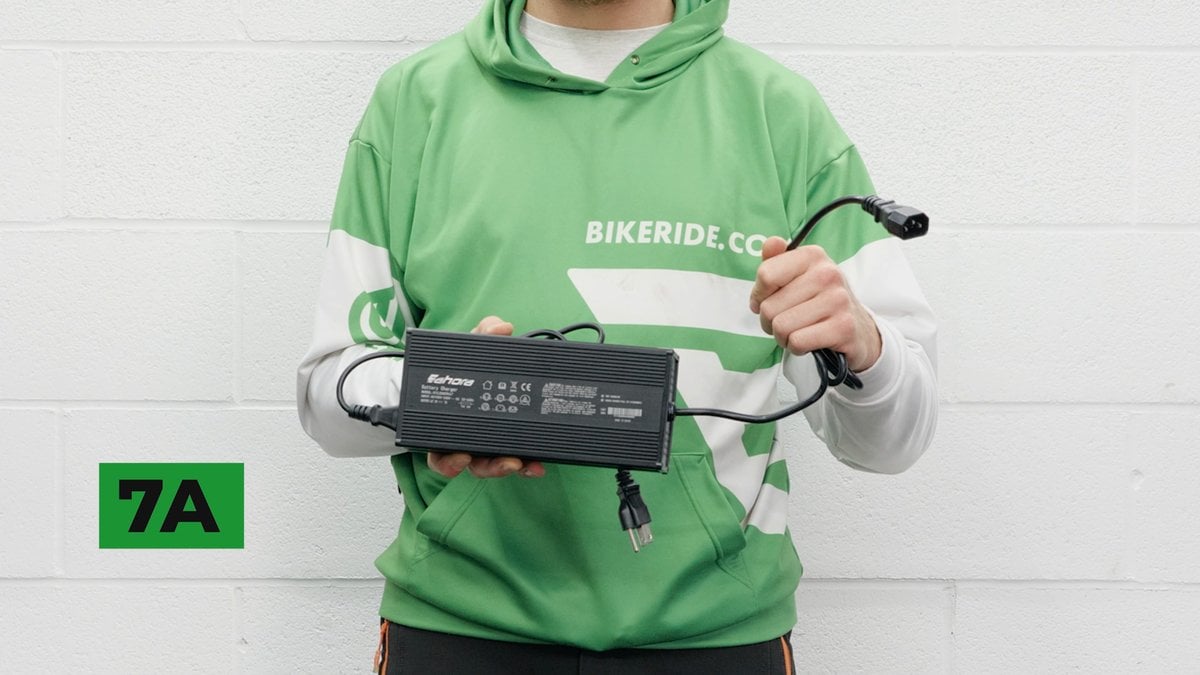
CalculatedThe 60V battery charges on the included 7A charger, so by our calculation a full charge from empty takes at least 10.0 hours (70Ah ÷ 7A). Eahora claims 8–10 hours, so only the slow end is possible.
Battery practicality and certification
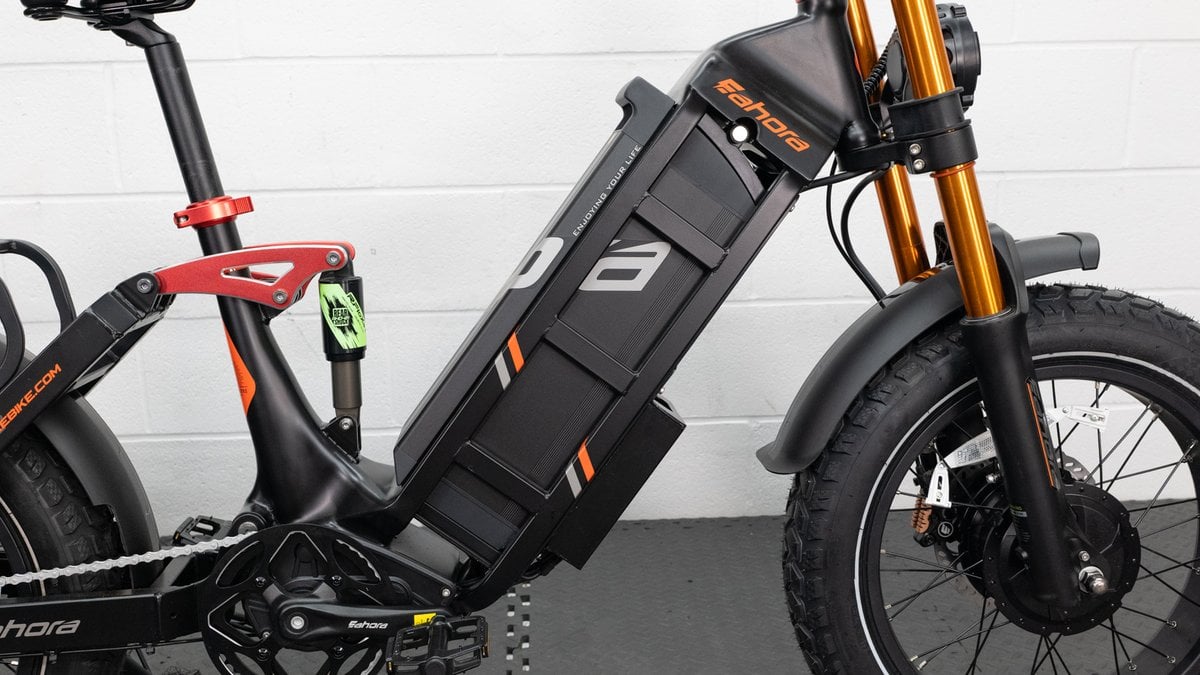
Fact checkThe 60V 70Ah battery (4,200 Wh) sits in an open cage of frame tubing rather than inside a down tube. It is removable and lockable, and charges on or off the bike. Eahora lists it at 36.6 lb. Our scale read 33.4 lb, the heaviest battery we have weighed. The bike has CE certification but no UL certification.
Braking and Safety
2 tests · 2 ratingsBrake test: 20 to 0 mph
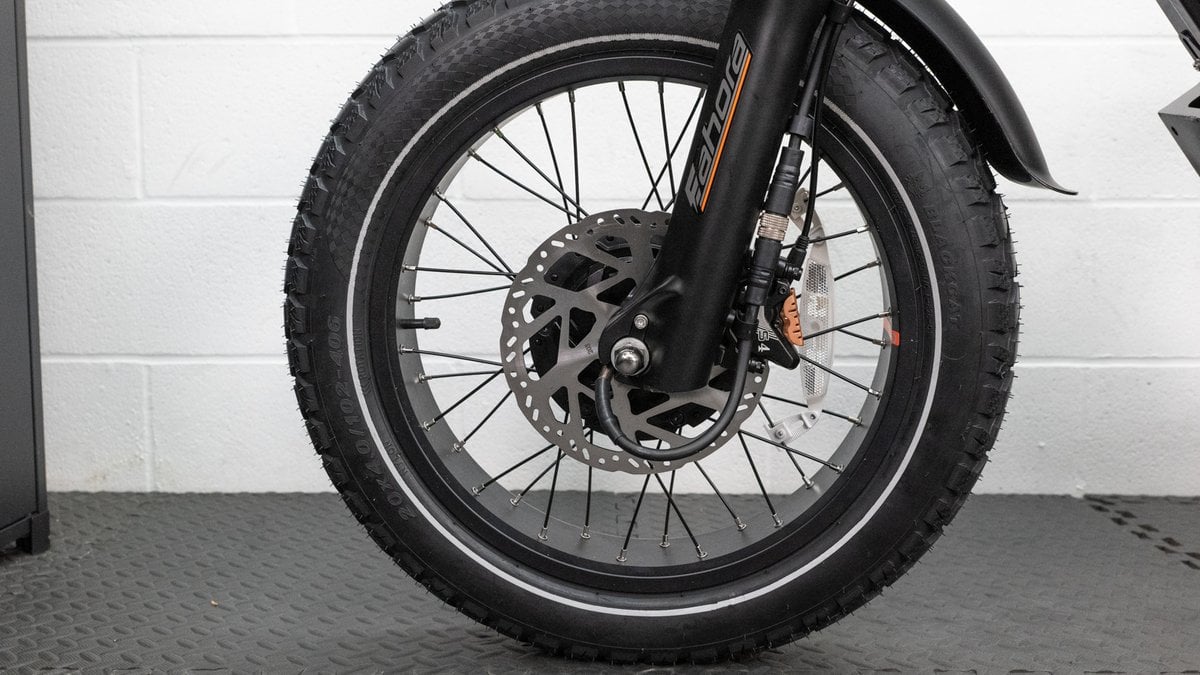
MeasuredEahora-branded four-piston hydraulic calipers on 203 mm rotors stopped the Juliet Pro II from 20 mph in 16 feet, 2.3 feet shorter than the 18.3-foot average of the moped- and motorcycle-style e-bikes we have tested. Our rear brake lever was noticeably spongier than the front and pulled close to the bar, so it will probably need bleeding.
Lights and visibility
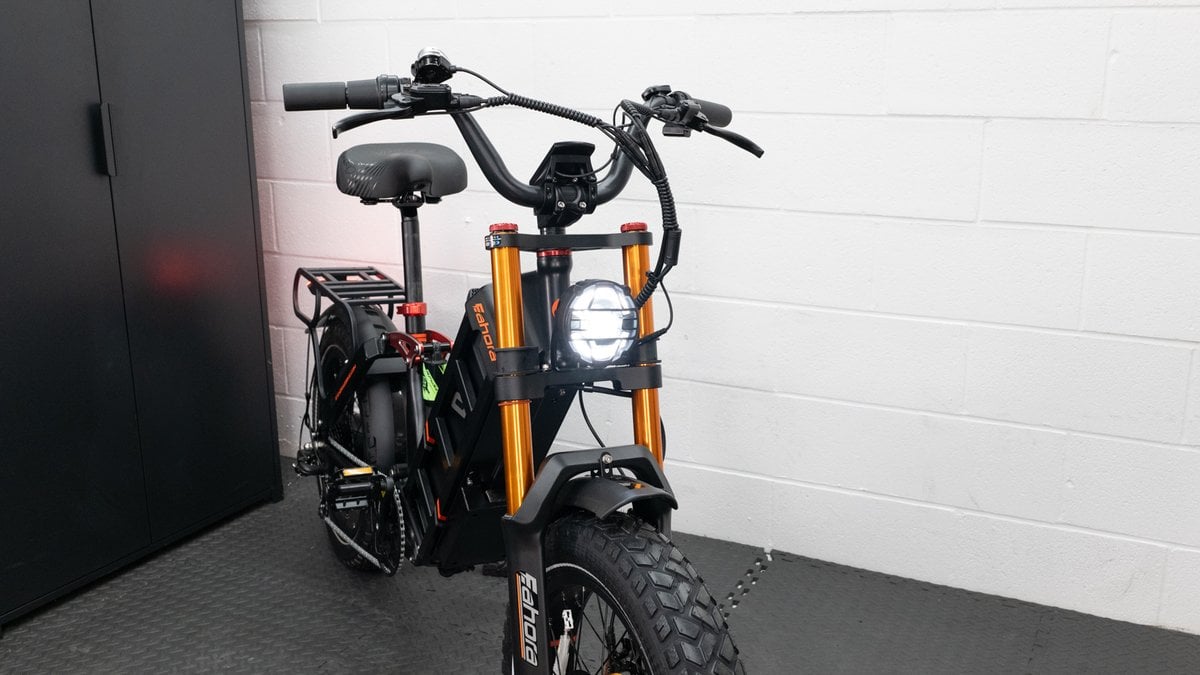
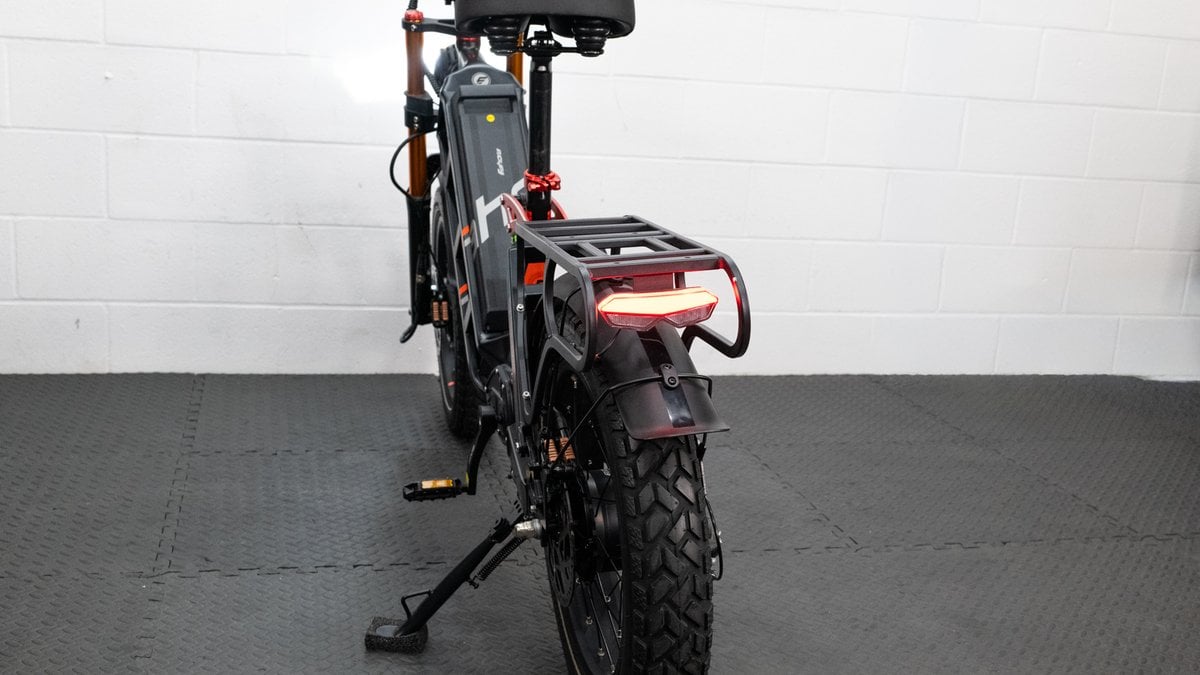
MeasuredThe headlight has an ambient light sensor and a built-in horn, and measured 1,266 lux at 15 feet, the third-brightest of the 17 e-bikes we have measured this way. Eahora rates it at 2,000 lumens. The taillight doubles as a brake light, but there are no turn signals.
Ride Quality and Handling
1 descriptor · 9 ratingsRiding the Juliet Pro II
As you would expect at 148.4 lb, the Juliet Pro II is unpleasant to ride without power. Even pushing it is hard, and lifting the front wheel over a curb or a pothole takes real strength. It corners well for its size and weight, and suits pavement and light off-road paths, but in the high 30s, it loses its composure.
Stability at top speed
RatedAround 28 mph the Juliet Pro II felt stable and planted. In the high 30s it lost that composure, probably because of the 20" wheels, as the 26" Romeo felt more stable. 43 mph felt dangerously fast.
Comfort, suspension, and vibration
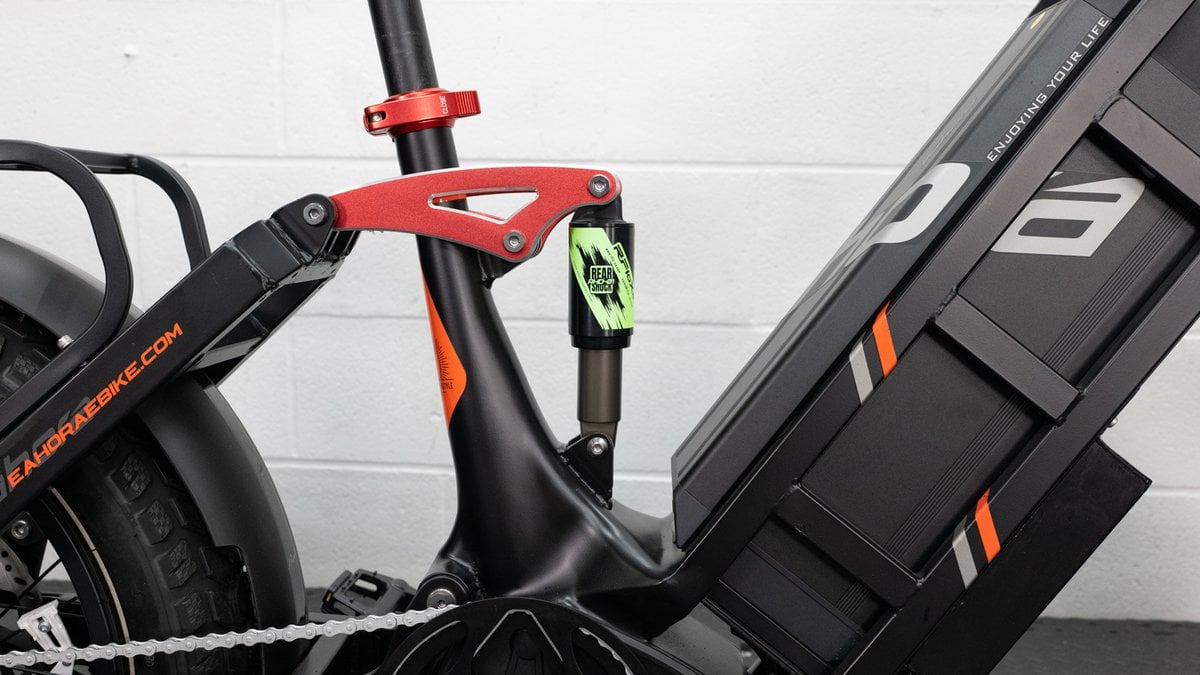
RatedThe hydraulic coil fork has 100 mm of travel and a rebound dial on the right, its only adjustment. Both caps are labeled "compression," but the left one does nothing. The rear coil shock has a 50 mm stroke and no adjustment. On smooth roads the suspension works fine, but on gravel logging roads, potholes and washboard came through harshly, and the rear bottomed out on moderate impacts. The fork was more resistant to bottoming out.
The saddle was comfortable through the three-hour range test. The grips are basic and felt slick in the rain.
Riding position
DescriptorWhere the Juliet Pro II sits on the spectrum from fully upright to fully aggressive, on its 710 mm riser bar. We sat upright with a fairly straight back.
Fit and Sizing
2 checks · 2 ratingsTrue to size?
VerdictEahora's spec table lists riders from 5'7" to 6'4", a 9-inch span served by 5.3 inches of saddle-height adjustment. By our rule of thumb the span is plausible, but in practice, the top end is out of reach. At 6'0" with a 33" inseam, Scott was short of full leg extension, though he could put a foot flat on the ground. We think 6'0" is the limit if you plan to pedal this bike.
| Measurement | Eahora claims | We found |
|---|---|---|
| Rider height range | 5'7"–6'4" (spec table) | 6'0" already needs the seatpost at its highest, so 6'4" is out of reach |
| Saddle height, ground to top of saddle | 32.6"–40.5" | 32.3"–37.6", measured: 5.3" of adjustment |
| Saddle height, bottom bracket to top of saddle | Not published | 22.4"–27.5", measured. Compare it with your own bike |
| Fits our tester (6'0", 33" inseam) | Inside the claimed range | Close: short of full leg extension at the top of the seatpost |
| Claimed height range accuracy | 9" span of rider height | (9 − 2) ÷ 5.3 = 1.3×, inside our 2.0× limit |
| Standover | 24.2" | Matches our measurement: 24.2" |
| Our verdict | One size fits 5'7"–6'4" | Misleading at the top: 6'0" is the practical limit |
Cockpit adjustability
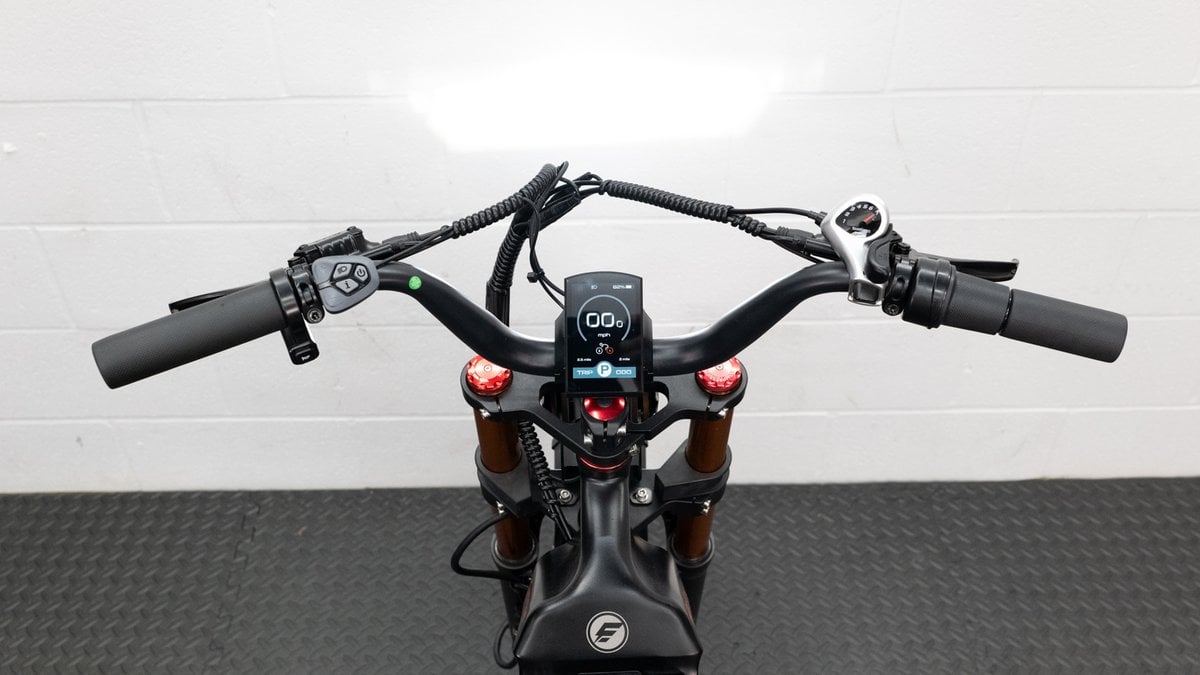
RatedThe 710 mm aluminum riser bar (Eahora's figure) carries the control pad at the left grip, the 4-inch display in the middle, and the twist throttle and Shimano 7-speed shifter at the right. Tilting the bar in its stem adjusts the reach slightly.
Build and Components
1 test · 6 ratings · factsWeight, verified
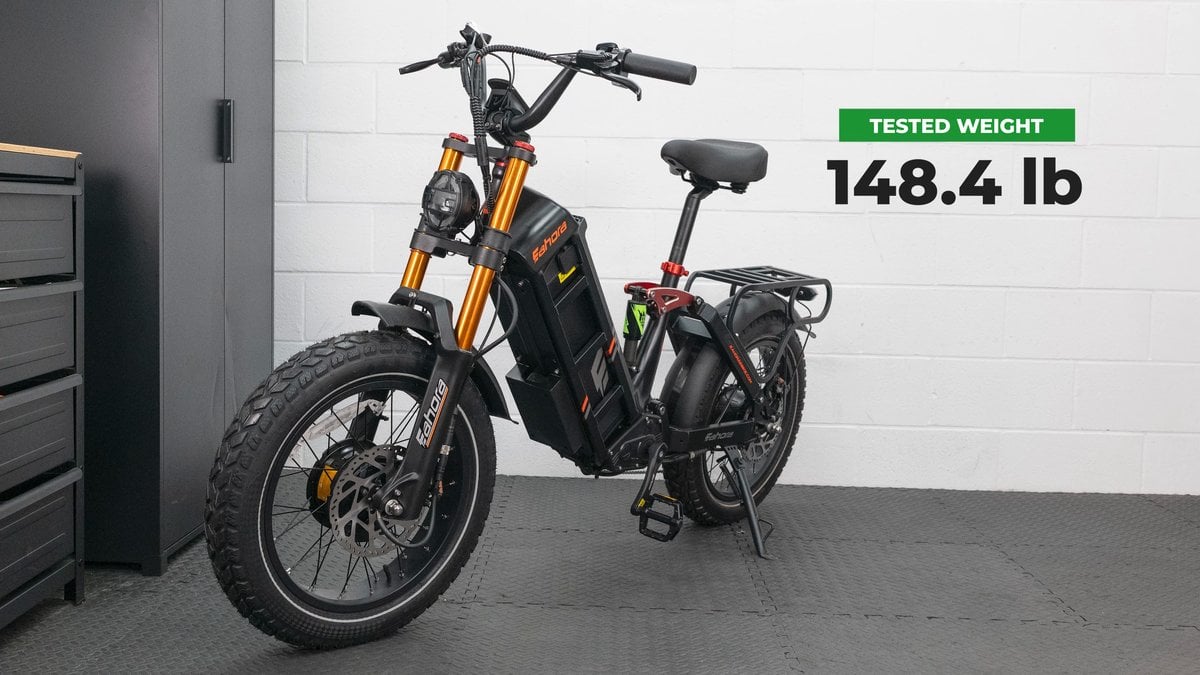
MeasuredEahora lists the Juliet Pro II at 148.15 lb with the battery. Our scale read 148.4 lb, pretty much spot on. It is the second-heaviest bike in our database, behind only its 26-inch sibling, the Romeo Ultra II (177.8 lb), and 43.2 lb over the 105.2 lb average of the moped- and motorcycle-style e-bikes we have weighed.
Frame, finish, and integration
RatedThe single-size, high-carbon steel step-through frame comes in black, as tested, or white. Instead of a solid down tube, a cage of frame tubing surrounds the semi-exposed battery. The controller sits in a metal box under the battery, and its top is exposed to debris thrown up by the front tire, so we would be careful in heavy rain or mud.
Drivetrain and shifting
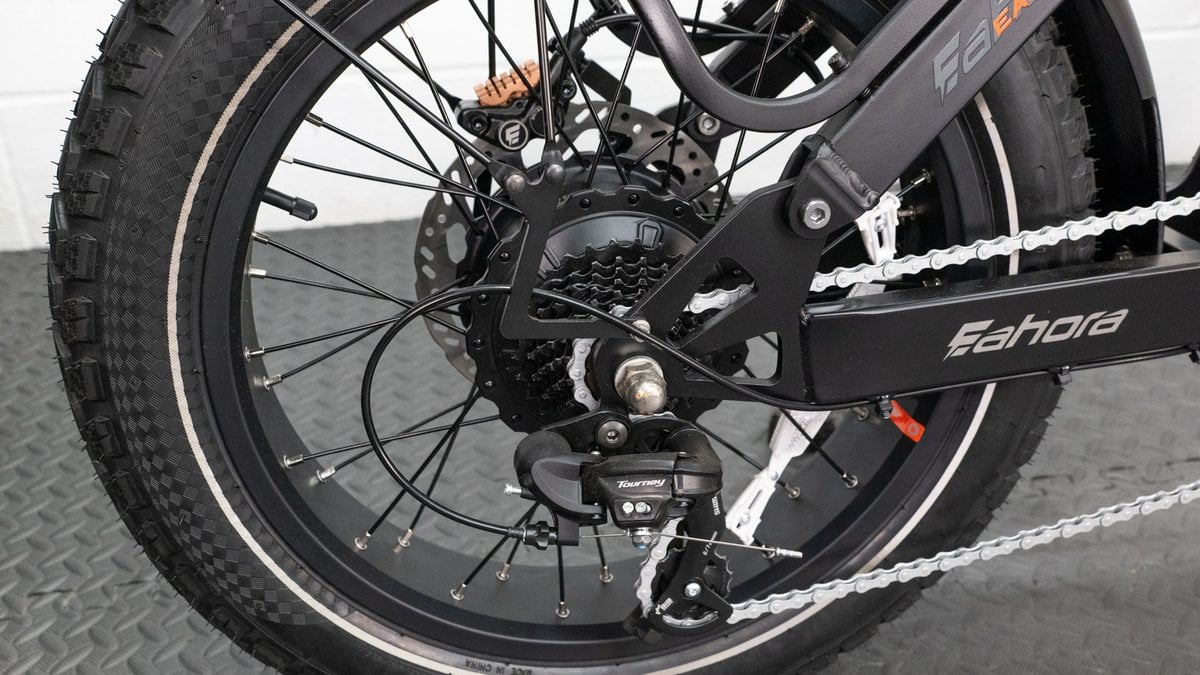
RatedThe entry-level Shimano Tourney 7-speed drivetrain pairs a 44t chainring with a 14–28t freewheel. Past about 20 mph you run out of gears and spin with no resistance. We would like more gears, but we suspect most owners won't pedal this bike much.
Tires and accessories
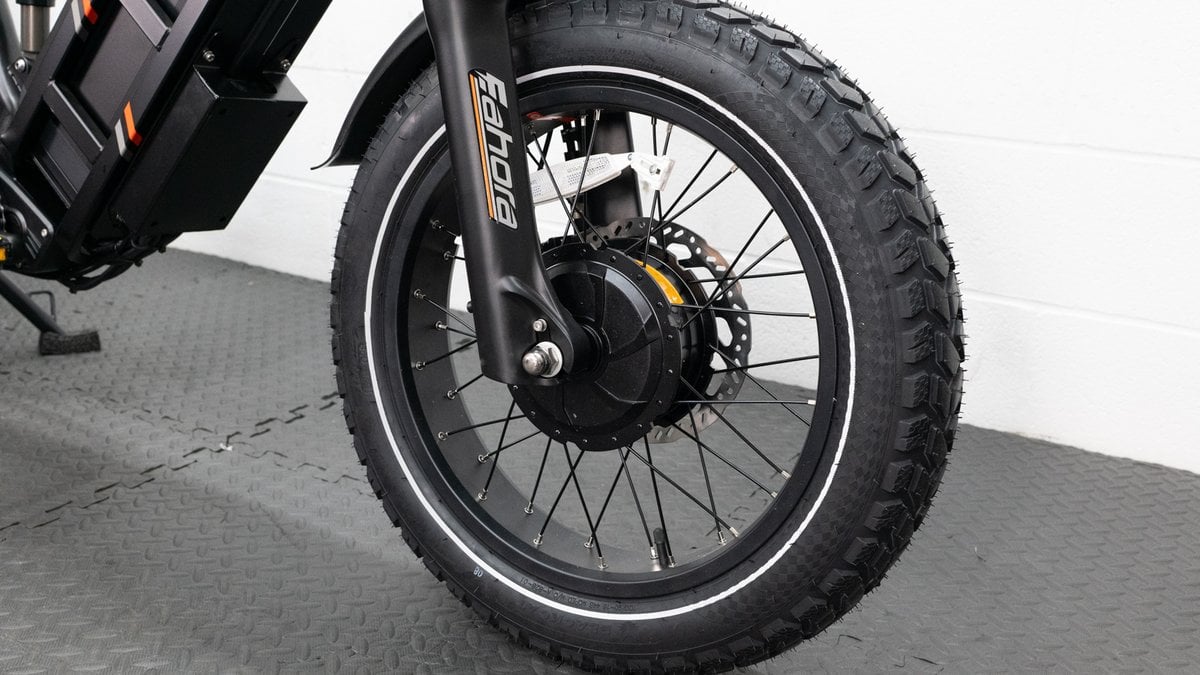
RatedThe Juliet Pro II rolls on 20-inch aluminum rims and 4-inch Blackcat tires with tubes. Eahora recommends 28–33 psi, but the sidewall says 5–30 psi, so we tested at 20 psi. The tires lacked bite on wet roads and under hard braking from high speed. Fenders, a kickstand, lights, and a horn come with the bike.
Display, Controls, and App
3 ratingsDisplay and controls
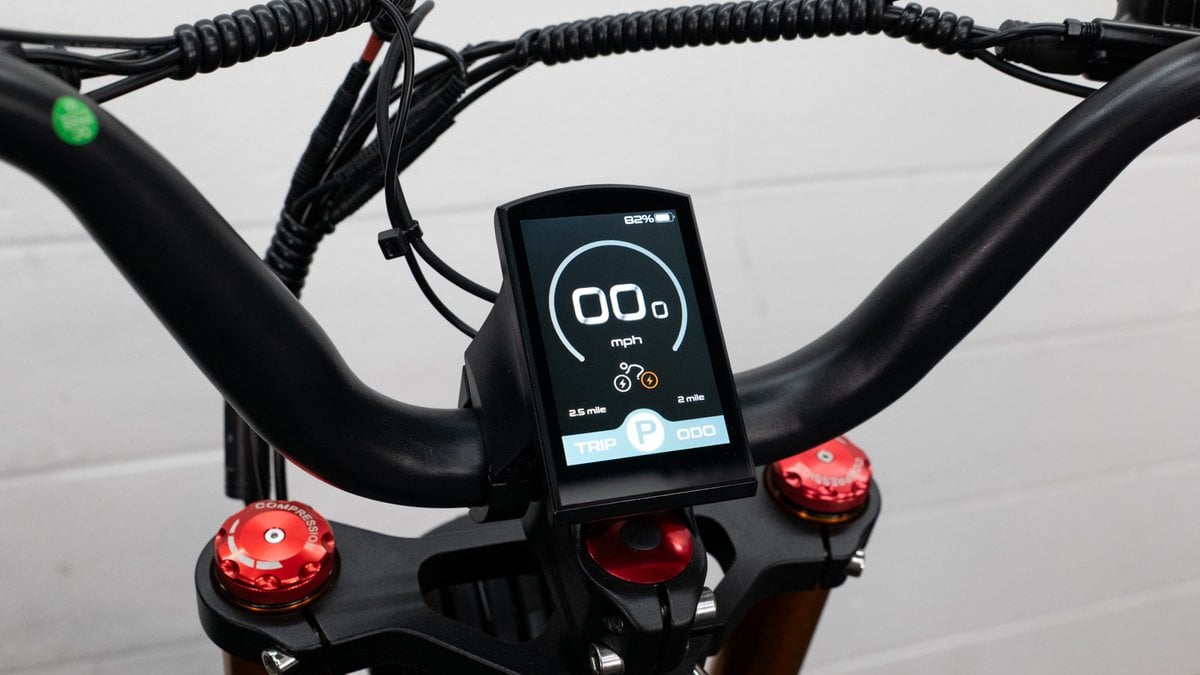
RatedThe 4-inch color display is readable in the sun, shows most of the information you need, and gives the battery charge as a percentage. Two things let it down: the speedometer reads about 12% high, and the speed-limit setting doesn't match the real speed. The advanced menu holds the "slow start" setting, which tames launches, and an option that makes the throttle follow the assist level.
That slow start setting is worth adjusting. The twist throttle is easy to bump, especially with gloves, and as shipped it gives full power at every assist level. The headlight button cycles the motor modes.
Companion app
RatedThe bike connects over Bluetooth to a third-party app, Key-DISP. It is basic: it offers minimal control over the motor settings, and rudimentary GPS and ride tracking.
Ownership, Practicality, and Value
2 tests · 6 ratings · factsAssembly and setup
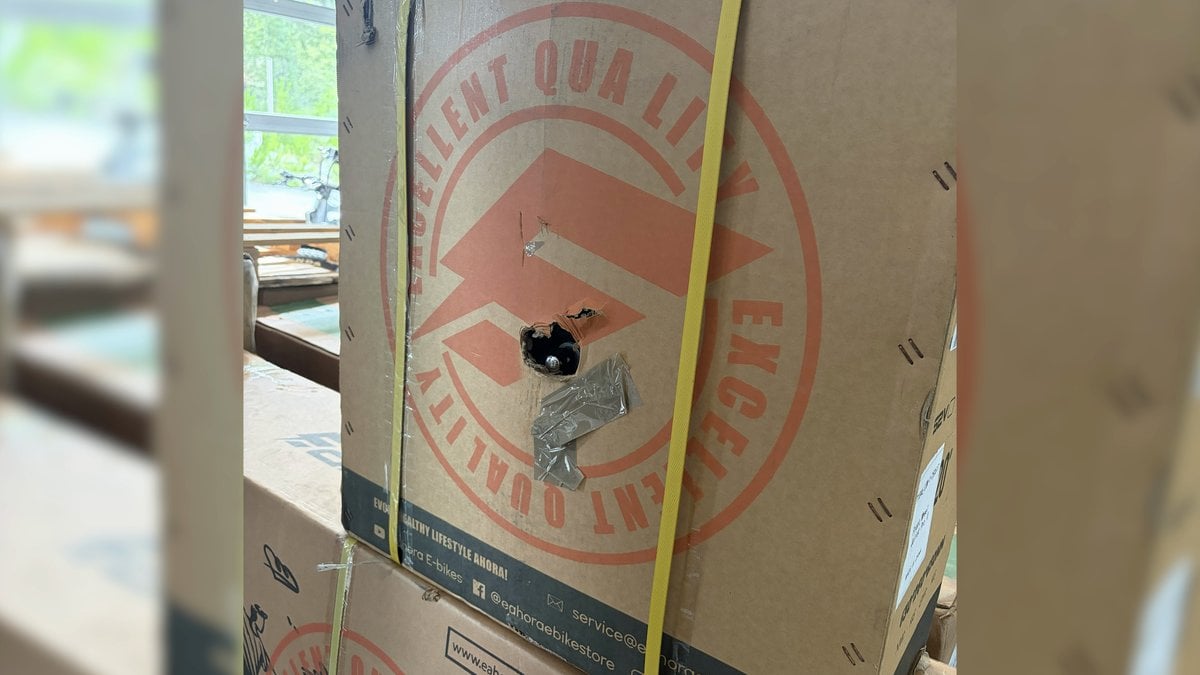
MeasuredThe Juliet Pro II arrived in two boxes, the front wheel in its own. That box was damaged, but the packaging did its job and the wheel was fine. Assembly took us 40 minutes, quicker than the 59-minute average of the moped- and motorcycle-style e-bikes we have timed. The only issue was the spongy rear brake. No printed owner's manual came in the box.
Support response, tested
MeasuredEvery brand we review gets the same test. We send one short, everyday support question through the brand's public support channel, from a regular customer account with no BikeRide affiliation, so the test is equal for everyone. We then time how long the first useful reply takes, counting weekday hours only. For Eahora the first useful answer arrived after 13.5 hours, faster than the 18.1-hour average across the brands we have tested.
Serviceability and parts ecosystem
RatedThe drivetrain is a standard Shimano Tourney 7-speed, and the 20×4-inch tires use tubes. The brakes, electronics, and hub motors are Eahora-specific, so those parts come from Eahora, though the brakes use common mineral oil. The warranty is one year, and water damage is excluded.
Component level for the price
RatedThe Juliet Pro II has two 2,200W hub motors, a 4,200 Wh battery, four-piston hydraulic brakes on 203 mm rotors, coil suspension front and rear, a color display, fenders, and a bright headlight. For the price, we expected more: the drivetrain and the suspension are basic, and there is no UL certification.
Value for money
RatedWeighing everything we measured against the price at the time of publication: the fastest gradual climb we have recorded, 69.35 miles at a 28 mph cap, a 5-second launch, a 16-foot stop, and a bright headlight. Against that, 148.4 lb, weak suspension, missing documentation, conflicting specs, and no UL certification. For out-and-out performance it is good value, but there are plenty of drawbacks.
Full test results
Every measurement from this review in one table, against the average of similar bikes and the average of all 90 e-bikes we have tested.
| Test | Eahora Juliet Pro IIThis bike | Average of similar bikesSimilar | BikeRide averageAll bikes |
|---|---|---|---|
| Motor and performance | |||
| 0–20 mph, throttlevs. 9 other hub-motor e-bikes over 750W | 5.0 s | 7.5 s | 10.7 s |
| 0–20 mph, max pedal assistvs. 9 other hub-motor e-bikes over 750W | 7.0 s | 8.0 s | 8.4 s |
| Gradual hill climb, unlockedvs. 9 other hub-motor e-bikes over 750W | 1:31 | 2:06 | 2:22 |
| Gradual hill climb, 20 mph settingvs. 1 other hub-motor e-bike over 750W | 2:46 | 2:48 | 3:18 |
| Steep hill climb, unlockedvs. 3 other hub-motor e-bikes over 750W | 1:12 | 1:30 | 1:42 |
| Steep hill climb, 20 mph settingvs. 6 other hub-motor e-bikes over 750W | 1:59 | 2:08 | 2:39 |
| Speedometer deviationvs. 6 other e-bikes | +12% | +5% | +5% |
| Motor noise @ 20 mph, unloadedvs. 16 other e-bikes | 67.7 dB(A) | 66.6 dB(A) | 66.6 dB(A) |
| Assist engagement delayvs. 15 other e-bikes | 0.25 crank rev | 0.2 crank rev | 0.2 crank rev |
| Range and charging | |||
| Range (max assist, 28 mph cap)vs. 12 other moped- and motorcycle-style e-bikes | 69.35 mi | 37.4 mi | 30.4 mi |
| Range vs claimedvs. 12 other moped- and motorcycle-style e-bikes | 107% | 48% | 55% |
| Efficiency (max assist)vs. 12 other moped- and motorcycle-style e-bikes | 60.6 Wh/mi | 40.9 Wh/mi | 26.5 Wh/mi |
| Charge time 0→100%vs. all e-bikes tested | 10.0 h | 6.3 h | 6.3 h |
| Braking and safety | |||
| Brake test, 20–0 mphvs. 11 other moped- and motorcycle-style e-bikes | 16 ft | 18.3 ft | 19.3 ft |
| Headlight @ 15 ftvs. 16 other e-bikes | 1,266 lux | 579 lux | 579 lux |
| Build and ownership | |||
| Measured weightvs. 11 other moped- and motorcycle-style e-bikes | 148.4 lb | 105.2 lb | 74.7 lb |
| Battery weightvs. 5 other moped- and motorcycle-style e-bikes | 33.4 lb | 14.7 lb | 11.7 lb |
| Assembly timevs. 2 other moped- and motorcycle-style e-bikes | 40 min | 59 min | 52 min |
| Support response, tested (weekday hours)vs. 31 other brands | 13.5 h | 18.1 h | 18.1 h |
Similar bikes are the hub-motor e-bikes over 750W, counting both motors, for acceleration and the climbs, the moped- and motorcycle-style e-bikes for range, efficiency, range vs claimed (against Eahora's 65-mile throttle claim), braking, weight, battery weight and assembly, and all e-bikes for the other rows. Support is averaged per brand. Our acceleration and climb figures use both motors. Charge time is calculated (Ah ÷ A).
Detailed specs
As published by Eahora for the Juliet Pro II we tested, with component details from our tester's notes. Values we verified in testing are covered in Claimed vs. measured.
| Electric bike class | Unrestricted, with a throttle. Exceeds e-bike limits in most places |
|---|---|
| Motor | Two Eahora hub motors, front and rear, 2,200W each (2,600W peak each) |
| Max torque | 2 × 110 Nm in Eahora's spec table, 2 × 95 Nm elsewhere on its page (claimed) |
| Battery | 60V 70Ah (4,200 Wh), removable and lockable, 36.6 lb claimed (33.4 lb measured) |
| Range claimed | 120–220 miles with pedal assist, 60–65 miles without (60–68 elsewhere on the page) |
| Top speed | 20 mph as shipped, adjustable up to 62 mph. 43 mph claimed and GPS-verified |
| Throttle | Twist, right grip |
| Pedal assist | 5 levels |
| Sensor | Cadence |
| Charger | 67.2V 7A |
| Charge time | 8–10 hours claimed (10.0 hours calculated) |
| Display | 4" color LCD with motor-mode switch, Bluetooth, USB charge port |
| Certification | CE. No UL certification |
| Water/dust rating | IPX6 claimed. The owner's manual says the bike isn't waterproof |
| Warranty | 1 year. Water damage is not covered |
| Frame | High-carbon steel, step-through, one size, black or white |
|---|---|
| Fork | Coil spring with hydraulic damping, rebound adjustment, 100 mm travel |
| Rear shock | Coil, 50 mm, not adjustable |
| Brakes | Eahora S4 EHD650 four-piston hydraulic calipers, mineral oil, semi-metallic pads, 203 mm rotors |
| Drivetrain | Shimano Tourney 7-speed, Shimano ASLTX50R7CT shifter |
| Chainring / freewheel | 44t with a single-sided guard, 170 mm aluminum cranks / 14–28t |
| Rims / tires | 20" 36-hole aluminum / 20" × 4.0" Blackcat with tubes, 5–30 psi on the sidewall (Eahora recommends 28–33 psi) |
| Handlebar | Aluminum riser, 710 mm × 31.8 mm |
| Grips | Rubber, 120 mm |
| Saddle | Wide leather seat with memory foam |
| Pedals | Wellgo 16/9 aluminum platform |
| Lights | 2,000-lumen (20W) LED headlight with built-in horn and ambient light sensor, LED taillight with brake light |
| Fenders | Plastic, front and rear |
| Kickstand | Aluminum, heavy-duty |
| Payload capacity | 400 lb on Eahora's US site, 330 lb on its Canadian site |
Geometry details
Measured on our test bike, one frame size. ✓ measured = Eahora doesn't publish this figure, so it's our own measurement. ✗ = Eahora's published figure is more than 3 mm from what we measured.
| Measurement | One size (claimed 5'7"–6'4") | |
|---|---|---|
| Seat tube | 16.5" (419 mm) | ✗ Eahora: 10.6" (270 mm) |
| Reach | 22.0" (559 mm) | ✗ Eahora: 22.8" (580 mm) |
| Stack | 24.0" (610 mm) | ✓ measured |
| Standover height | 24.2" (615 mm) | Matches Eahora's 24.2" (615 mm) |
| Effective top tube | 25.4" (645 mm) | ✗ Eahora: 23.6" (600 mm) |
| Wheelbase | 50.5" (1,283 mm) | ✗ Eahora: 48.8" (1,240 mm) |
| Total length | 70.0" (1,778 mm) | ✗ Eahora: 72.05" (1,830 mm) |
| Saddle height from the ground, min–max | 32.3"–37.6" (820–955 mm) | ✗ Eahora: 32.6"–40.5" (830–1,030 mm) |
| Saddle height from the bottom bracket, min–max | 22.4"–27.5" (569–699 mm) | ✓ measured |
Video review
Watch Scott's full 18-minute review of the Eahora Juliet Pro II, including footage from every test above, on BikeRide's YouTube channel.