Aventon Level 4 ADV Review

Our verdict
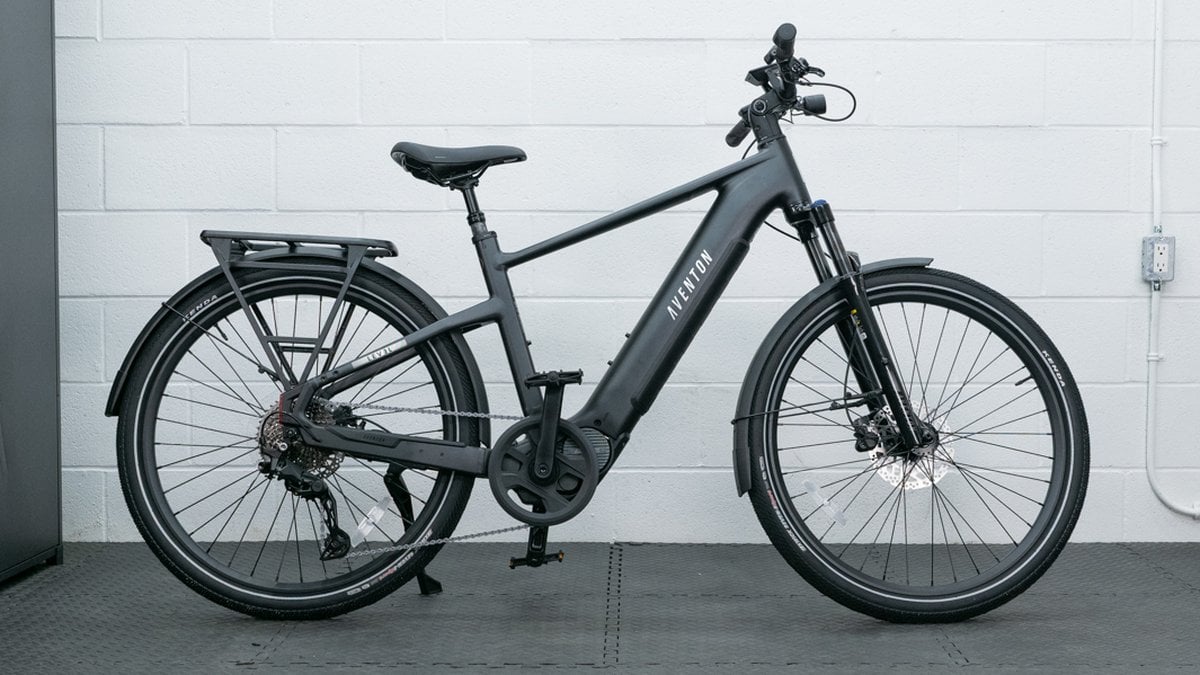
The Aventon Level 4 ADV is the mid-drive version of the brand's commuter, with pedal assist and gears that shift for you. It posted solid results in all tests, and lasted 58.01 miles in a range test using Auto PAS mode, the longest result in our comparison group. The inaccurate listed weight, stiff coil fork, and missing brake light count against the Level 4 ADV. For commuters who want an affordable mid-drive with plenty of range, it's easy to recommend.
Pros
- Second-longest medium-assist range of 14 commuters: 58.01 miles
- 6 seconds to 20 mph on pedal assist
- Natural, responsive mid-drive power delivery
- Auto PAS and AutoShift work well together
- Fenders, rack, lights, and turn signals included
- Quietest motor we have measured: 48.0 dB(A)
Cons
- 65.4 lb against a 61 lb claim
- Basic coil fork, stiff and slow
- Charge port sits low and exposed
- No brake light
Claimed vs. measured
Aventon sells the Level 4 ADV on its mid-drive, its range, and its automatic shifting. We checked the claims we can measure against our instruments. Here is the spec sheet next to what we measured:
| Claim | Aventon says | We measured | Verdict |
|---|---|---|---|
| Weight | 61 lb | 65.4 lb as shipped, 7.2% over | ✗ Misleading |
| Range (max claim) | Up to 110 mi | 58.01 mi in Auto mode | ✓ 53% of claim |
| Charge time | 5 hours | 5.5 h by our calculation (22Ah ÷ 4A) | ✓ Verified |
| Fits our tester (6'0", 33" inseam) | Size L fits 5'10"–6'4" | A comfortable, slightly forward-leaning position on the size L | ✓ Yes |
| Claimed height range accuracy | A 6" span of rider height on 7" of seatpost travel | (6" − 2") ÷ 7" = 0.6×, inside our 2.0× limit | ✓ Verified |
✓ = within tolerance · ≈ = close, with caveats · ✗ = fails our tolerance. Tolerances are defined in our test methodology.
Comparison
The most similar e-bikes we have tested first-hand, compared side by side using our own measurements and test results where possible.
This bike Aventon Level 4 ADV |
 Aventon Level 4 REC |
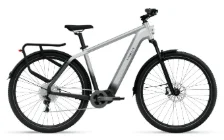 TENWAYS AGO X |
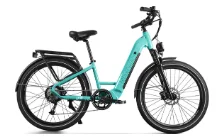 Himiway Rambler |
|
|---|---|---|---|---|
| BikeRide Score | 94 | 93 | 94 | 89 |
| Best price | $2,699.00 | $1,799.00 | $1,849.00 | $2,199.00 |
| Motor | 250W Ultro S mid-drive (750W peak) | 750W rear hub (1,440W peak in Boost) | 250W Bafang M410 mid-drive | 500W Bafang M600 mid-drive |
| Battery | 800 Wh | 733 Wh | 504 Wh | 720 Wh |
| Range tested (medium assist) | 58.01 mi Auto mode | No medium-assist run | 35.36 mi | 42.62 mi |
| Efficiency (medium assist) | 13.8 Wh/mi | No medium-assist run | 14.3 Wh/mi | 16.9 Wh/mi |
| Gradual hill climb | 3:10 | 3:02 | 3:20 | 3:09 |
| Steep hill climb | 2:32 | 2:13 | 3:02 | 3:05 |
| 0–20 mph (pedal assist) | 6.0 s | 6.0 s | 8.0 s | 12.0 s |
| Brake 20–0 mph | 20.5 ft | 22 ft | 20 ft | 18.5 ft |
| Measured weight | 65.4 lb | 69.3 lb | 61.0 lb | 67.0 lb |
| Top speed | 20 mph as shipped, 28 mph in Class 3 | 28 mph | 20 mph | 25 mph |
| Torque (claimed) | 100 Nm | 80 Nm (96 Nm in Boost) | 80 Nm | 120 Nm |
| Charge time | 5.5 h | 5.0 h | 4.7 h | 5.0 h |
| Suspension | 100 mm coil fork, preload + lockout, 50 mm suspension seatpost | 80 mm coil fork + 50 mm suspension seatpost | 110 mm fork with lockout | Suspension fork |
| Drivetrain | 10-sp Shimano CUES, electronic shifter with AutoShift | 8-sp Shimano Altus | 10-sp Shimano Deore | 9-sp Shimano Altus |
| Tires | 27.5×2.2″ Kenda | 27.5×2.2″ Kenda | 29×2.25″ CST | 27.5×2.4″ Innova |
| Frame | Aluminum, step-over in three sizes or step-through in two | Aluminum, step-over or step-through, two sizes | Aluminum, step-over, three sizes | Aluminum |
| Assist sensor | Torque, dual-sided | Torque + cadence, switchable in the app | Torque | Torque + cadence |
| Water rating | IPX6 bike, IP67 motor | IPX5 bike, IPX6 components | IPX4 | IPX4 |
| Certification | UL 2849 + UL 2271 | UL 2849 + UL 2271 | In progress when we tested it | In progress when we tested it |
Who should buy the Level 4 ADV
We believe the Aventon Level 4 ADV is a good choice for:
- Commuters who want range to spare. Our Auto-mode run lasted 58.01 miles with 1,581 feet of climbing, the longest run in the comparison group.
- Riders who want natural-feeling assist. The quiet Ultro S mid-drive delivers smooth assist that matches your input.
- Level 4 buyers who want the bike to do the thinking. AutoShift picks the gear and Auto mode picks the assist level. The REC has neither (ADV or REC?).
Who should NOT buy it
- Riders who want a throttle or brake light as standard. The throttle is sold separately and there's no brake light. The REC has both.
- Riders who expect a plush fork. The basic 100 mm coil fork is stiff and slow to respond.
Before you buy: ADV or REC?
We tested the hub-drive Level 4 REC with the same protocol, so the differences below are measured on the same courses, not read from a spec sheet.
- The ADV is quieter. The ADV measured 48.0 dB(A) on our bench to the REC's 70.4, and it stays quiet under load, where the REC's hub whines and vibrates.
- The REC is quicker on climbs. It climbed the steep hill in 2:13 to the ADV's 2:32 and the gradual one in 3:02 to 3:10.
- The ADV stops faster and shifts for you. It needed 20.5 feet from 20 mph to the REC's 22, and its 10-speed CUES drivetrain shifts automatically.
- The REC has more in stock form. A throttle, a brake light, regenerative braking and coasting, and Boost mode.
- Both offer good range. The ADV lasted 58.01 miles in Auto mode, which delivers slightly more power than Sport (PAS 2/3). The REC lasted 44.20 at max assist.
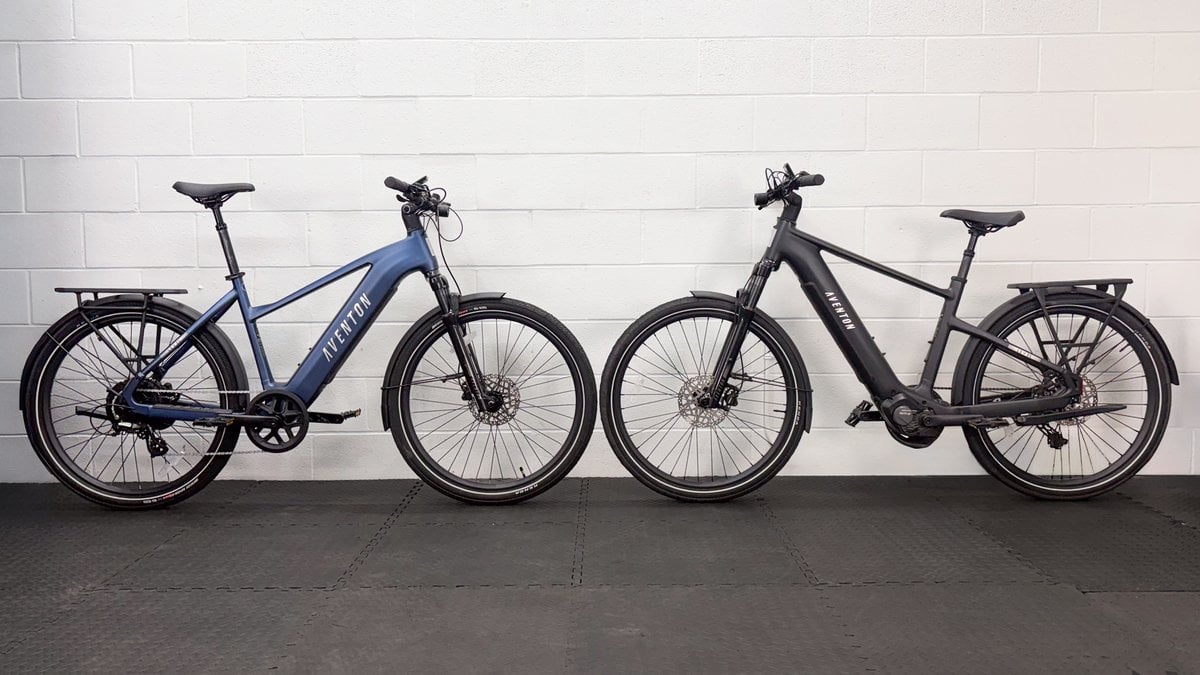
If you want the smoothest assist and automatic shifting, the ADV is the better bike. If you want a throttle, a brake light, and the faster climbing, the REC does the job for less.
How we test
Every e-bike we review goes through the same standardized tests, performed the same way, on the same documented courses: range tests to motor shutoff, two hill climbs, acceleration, braking, and a verified weigh-in. Every result is stored in our database and shown against similar bikes and against the 90 bikes we have tested. Where a number can't be measured yet, we rate it 1–5 against written anchors, never a gut feeling. Read the full BikeRide Methodology 1.1 →
- Tester
- 6'0", 33" inseam
- Rider + gear
- 200 lb
- Tires
- 27.5×2.2", 30 psi
- Speed limit
- 20 mph for the range test and both climbs
We tested the Level 4 ADV in the spring of 2026.
Score breakdown — how the 94 was built
The BikeRide Score is a weighted roll-up of five pillar scores. Our tester scores each pillar out of 100 from the measurements and ratings listed under it: measured results by where the ADV lands among similar bikes in our database, rated items by their written 1–5 anchors. Nothing from outside this page goes in, and every test result and rating on this page sits under one of the five pillars:
Motor and Performance
5 tests · 3 ratings · factsAcceleration 0–20 mph
MeasuredOn maximum pedal assist we measured 6 seconds to 20 mph. That is tied for fastest in this comparison group and beats the 7.3 s average of the mid-drive e-bikes we have tested. The ADV doesn't have a throttle.
Climbing Test 1: Gradual Hill
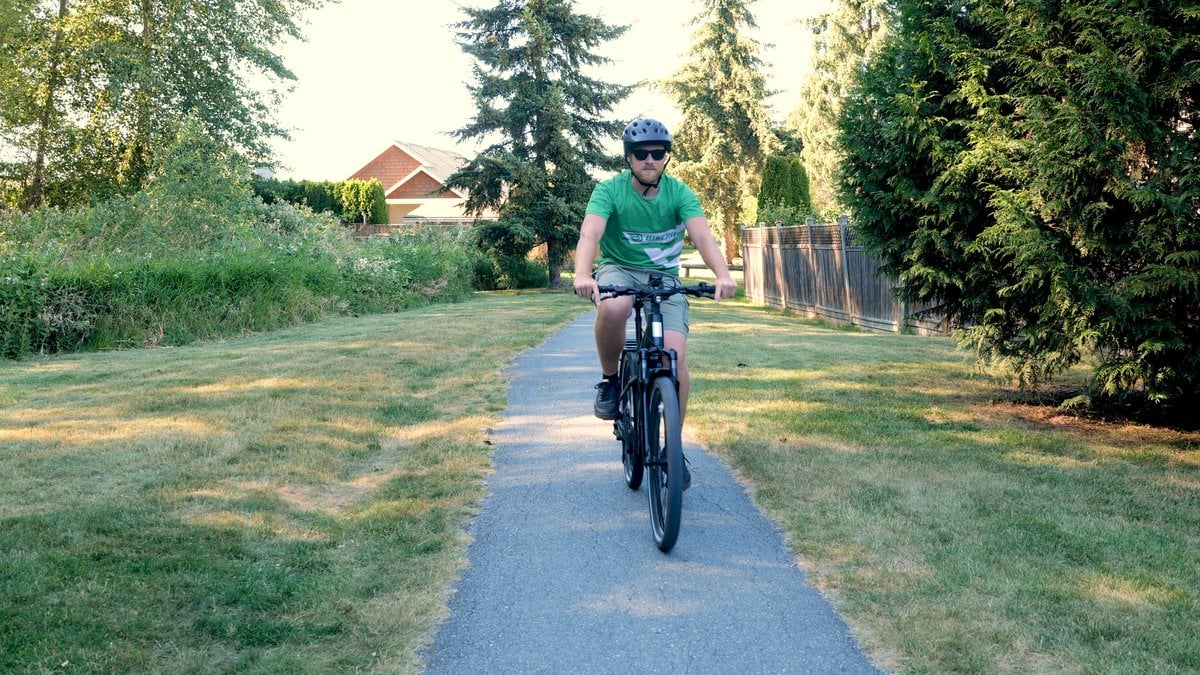
MeasuredOn the gradual hill (0.99 miles at up to a 6% grade) the ADV finished in 3:10 at an average of 18.1 mph with the 20 mph limit. That is fourth of five in this comparison group, 8 seconds behind the Level 4 REC, and 3 seconds inside the 3:13 average of the mid-drive e-bikes we tested on capped runs.
Climbing Test 2: Steep Hill
MeasuredOn the steep climb, 0.65 miles with 226 feet of gain and a 12% maximum grade, the ADV reached the top in 2:32 at an average of 15.3 mph. That is second in the group, 19 seconds behind the Level 4 REC and 6 seconds ahead of the Level 3, and 17 seconds quicker than the 2:49 average of the mid-drive e-bikes we have tested. The motor gave plenty of power on climbs without ever feeling overly aggressive.
Speed settings and e-bike class
Fact checkThe ADV ships as a Class 1 e-bike with pedal assist to 20 mph, and the app can set it to Class 2, or to Class 3 with assist to 28 mph. We rode it in Class 3 mode for a while and it handled the speed well, cruising in the mid 20s.
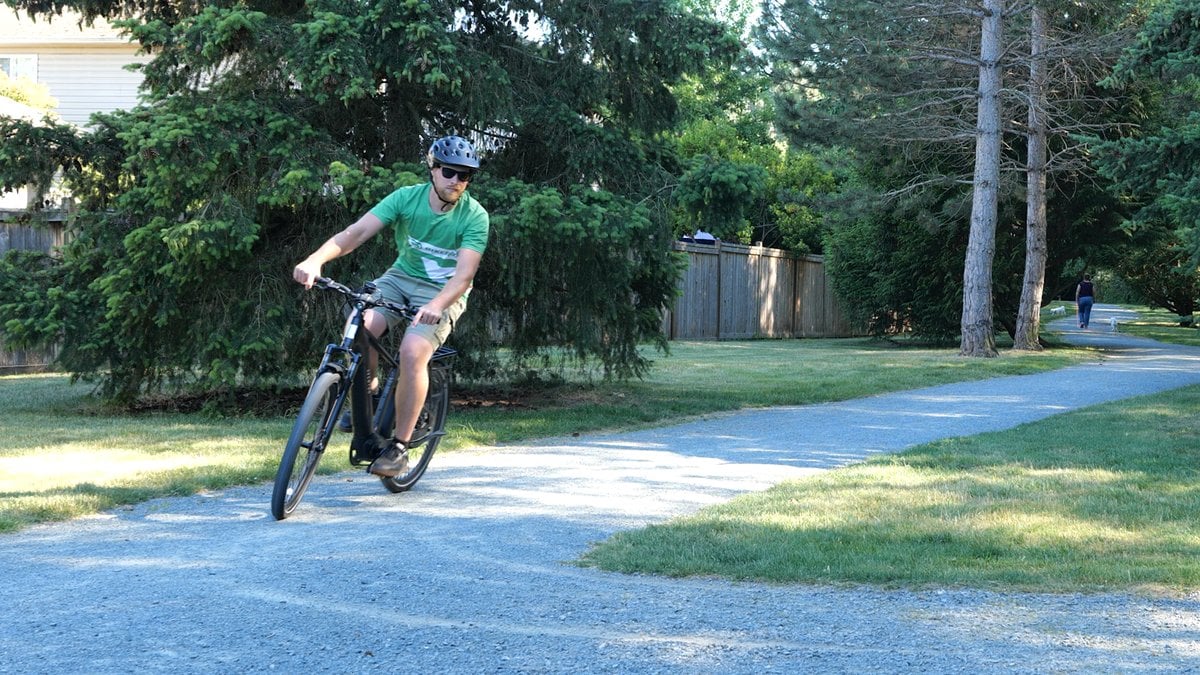
Class 3 e-bikes are limited to 28 mph on pedal assist and 20 mph on the throttle. Many trails and multi-use paths restrict Class 3 access, so check local rules before riding there.
Auto mode and AutoShift
Fact checkAuto mode reads your pedal input, cadence, and speed and picks Eco, Sport, or Turbo for you, while AutoShift watches cadence, speed, and motor output and picks the gear. The two worked well together, and we left them on for the entire range test, rarely wanting manual control, a real benefit in busy traffic. In Auto mode the bike averaged speeds a touch above Sport (PAS 2/3).
Assist engagement and cutoff
MeasuredA torque sensor manages the assist. From a standstill, power arrived with no measurable delay (0 crank revolutions), and the power output felt matched to our input, natural and responsive. The e-bikes we have measured average 0.2 crank revolutions before assist arrives.
Motor noise
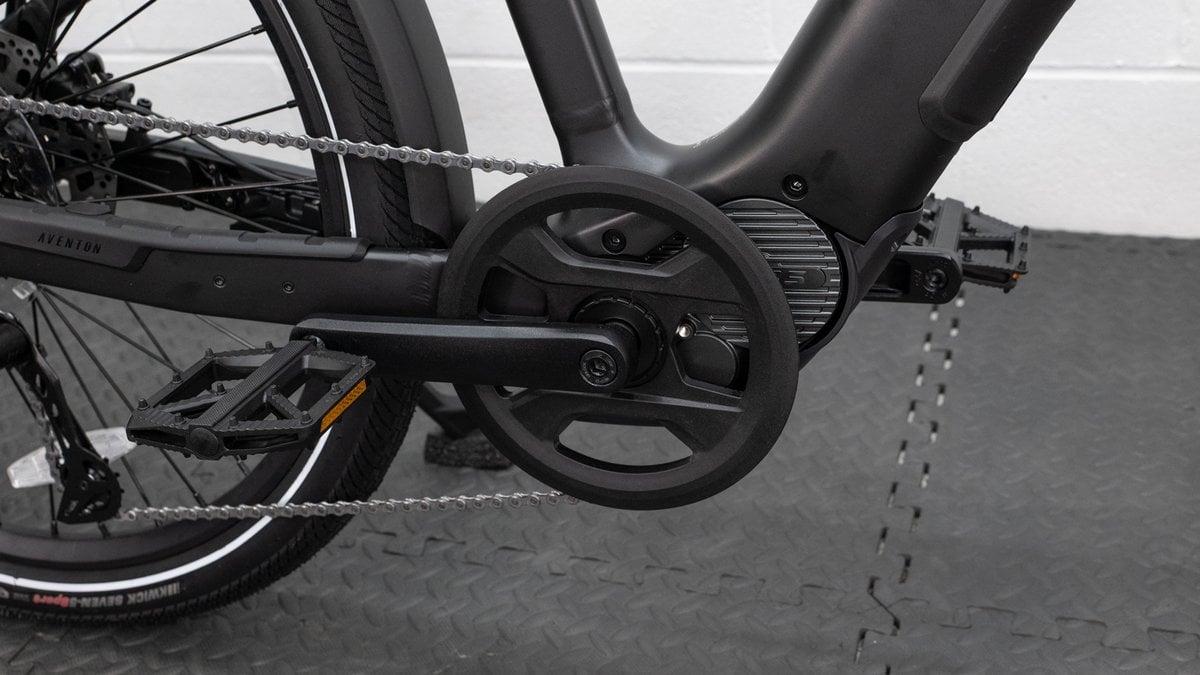
MeasuredMeasured indoors with the rear wheel spinning unloaded at 20 mph, the ADV registered 48.0 dB(A), the quietest of the 17 e-bikes we have measured this way and well under their 66.6 dB(A) average. Most of the noise came from the chain and wheel. The motor itself is very quiet, even under load, whereas the Level 4 REC's hub whines.
Range and Charging
4 tests · 2 ratings · factsRange Test 1: Auto mode (Auto PAS and AutoShift, 20 mph limit)
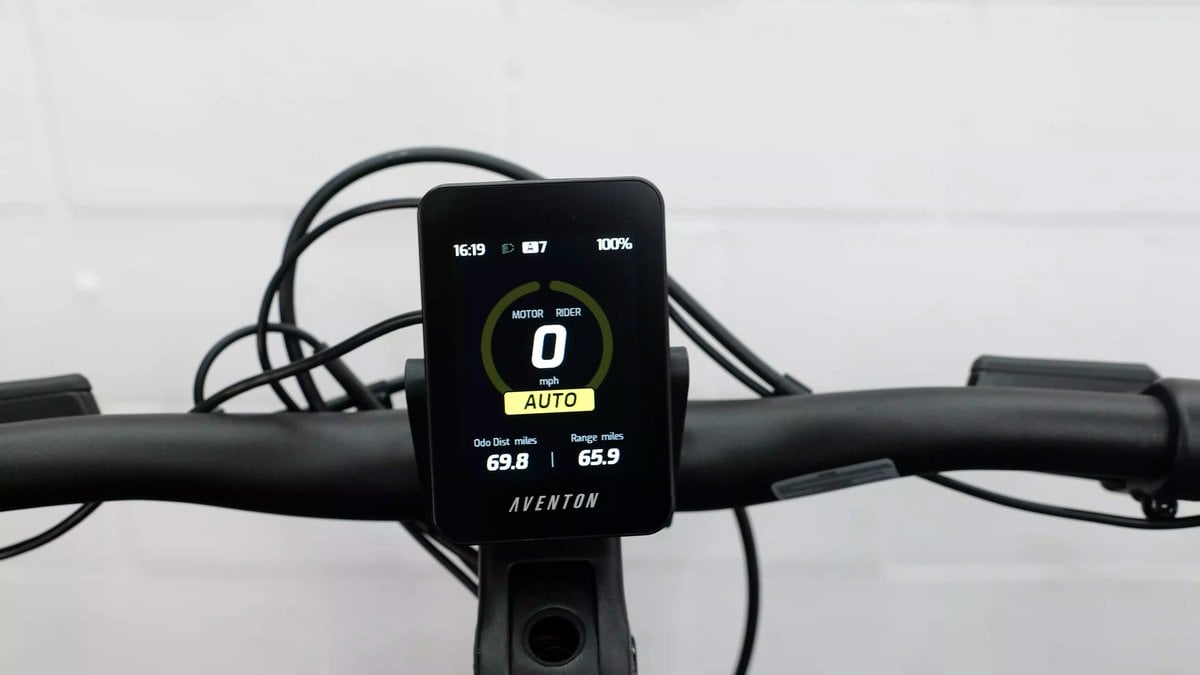
MeasuredOn our standard loop in Auto mode, with the bike choosing the assist level and the gear, the ADV lasted 58.01 miles with 1,581 feet of elevation gain, at a 14.8 mph average. Auto mode delivered speeds slightly above Sport, the middle of the three levels, so we compare this run with medium-assist runs: it is the longest result in this comparison group and 39% above the 41.8-mile average of the commuter e-bikes we have tested.
Range vs. claimed
DerivedAventon claims up to 110 miles, for a 165 lb rider in Eco mode on flat pavement. Our only range run, 58.01 miles in Auto mode, is 53% of the claim, inside our tolerance.
Efficiency
DerivedDividing battery capacity by measured range shows how far a bike stretches every watt-hour. At 13.8 Wh per mile, the ADV is well under the 16.6 Wh/mi average of the commuter e-bikes we have tested at medium assist.
Charge time
CalculatedThe 36V battery charges on the included 4A charger. Aventon lists it at 20Ah, but the label on ours reads 22Ah, so by our calculation a full charge takes at least 5.5 hours (22Ah ÷ 4A), quicker than the 6.3-hour average across our database. The charge port sits low on the battery, where it is exposed, which is not ideal on a commuter built for the rain.
Battery practicality and certification
Fact checkThe 36V pack (800 Wh, Samsung cells) sits inside the down tube and, on the step-over frame, comes out through the bottom. Aventon lists it at 8.7 lb, and ours weighed 9.2 lb on our scale. The battery is certified to UL 2271 and the electrical system to UL 2849. The bike is rated IPX6 and the motor IP67.
Braking and Safety
2 tests · 2 ratingsBrake test: 20 to 0 mph
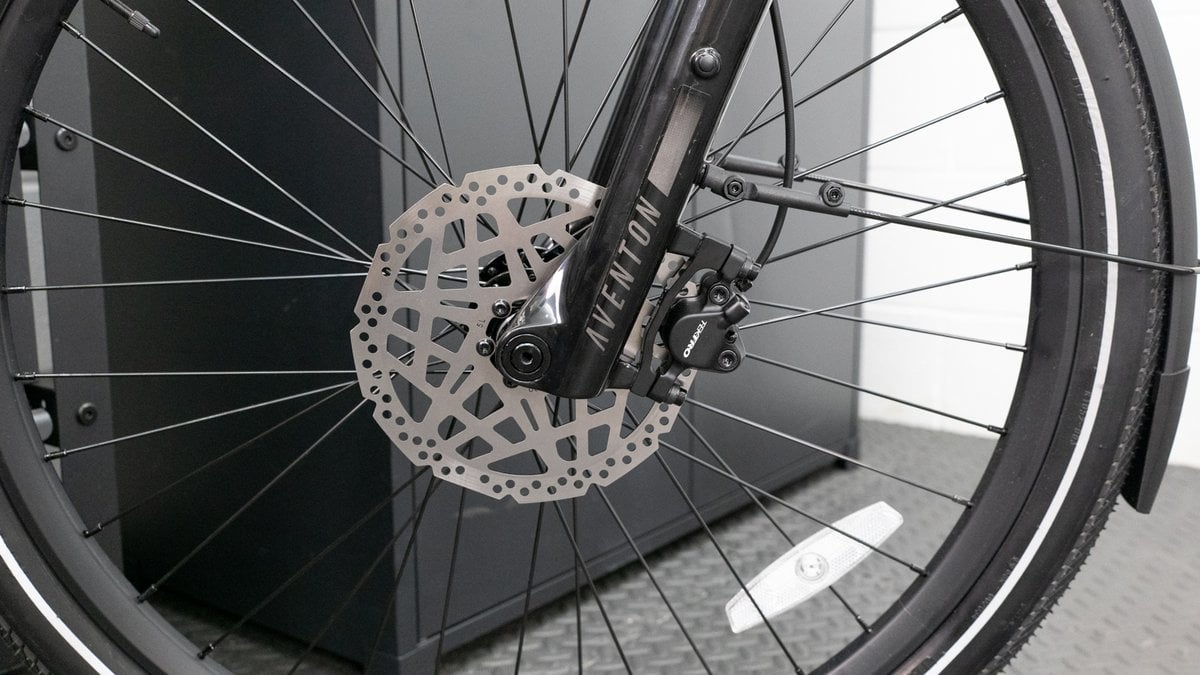
MeasuredThe Tektro HD-M3120 two-piston hydraulic discs with 180 mm rotors stopped the ADV from 20 mph in 20.5 feet, 0.6 feet above the 19.9-foot average of the commuter e-bikes we have tested and fourth of five in this comparison group, ahead of the Level 4 REC's 22 feet. The brakes are adequate for everyday riding without standing out.
Lights, signals, and visibility
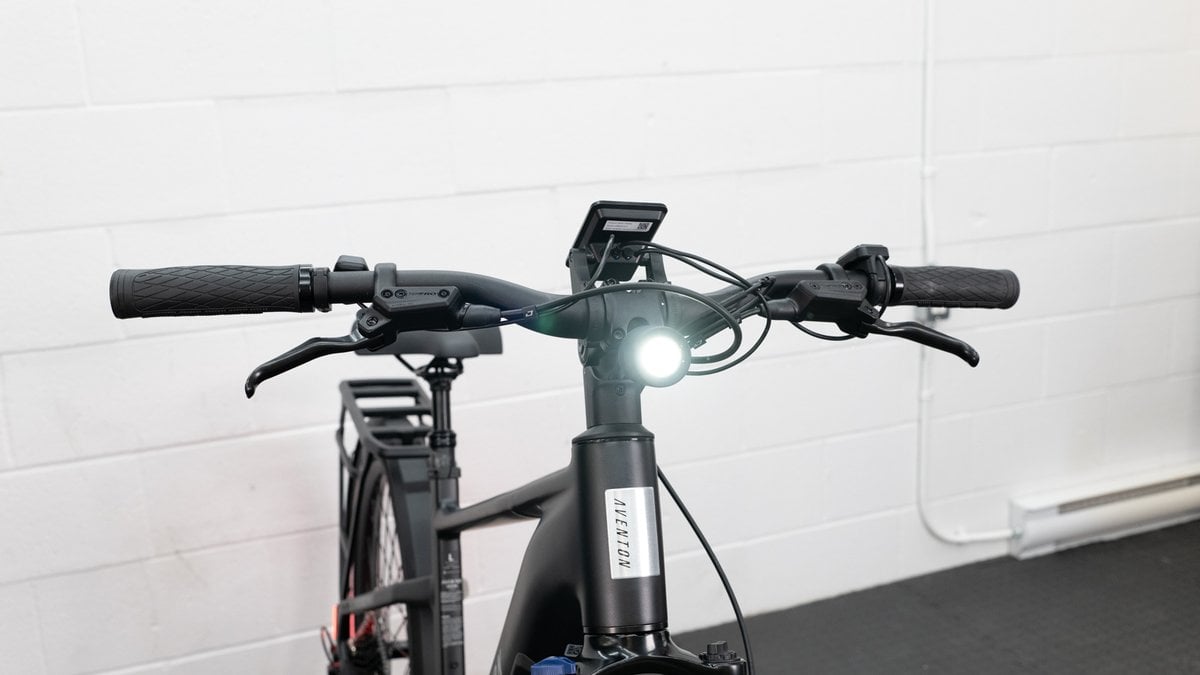
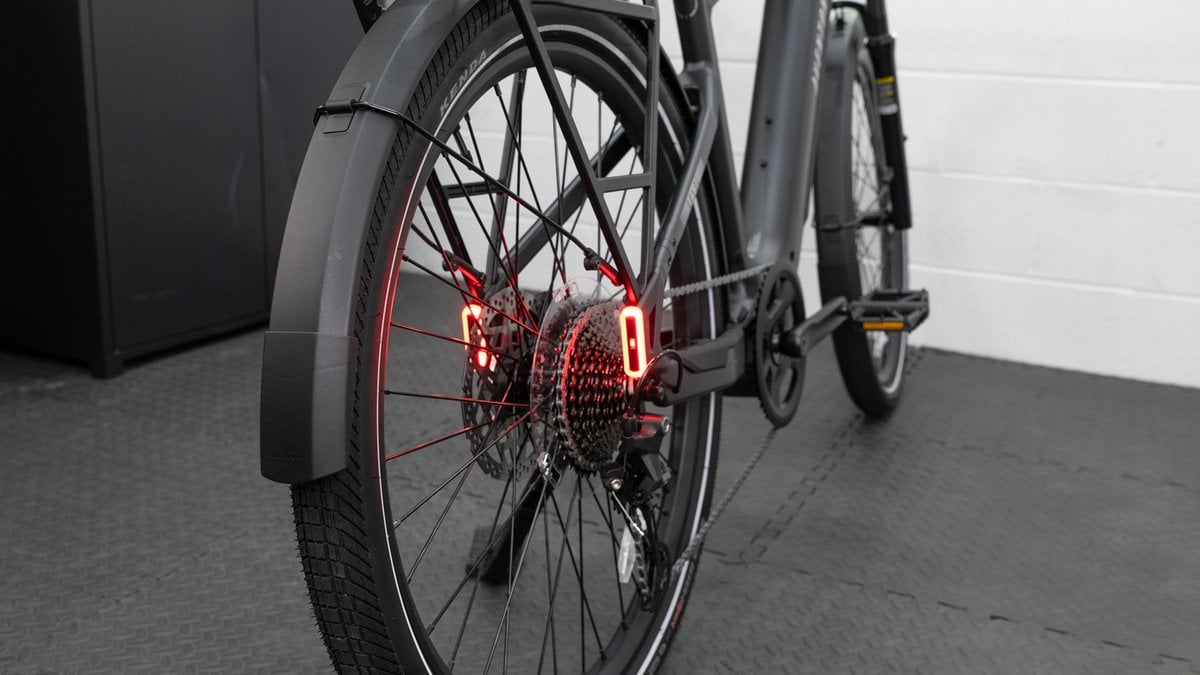
MeasuredThe ADV comes with an integrated headlight and a taillight with turn signals, but no brake light, a disappointing omission on a commuter. On our center-beam measurement the headlight put out 460 lux at 15 feet, below the 579 lux average of the 17 e-bikes we have measured.
Ride Quality and Handling
1 descriptor · 8 ratingsRiding the Level 4 ADV
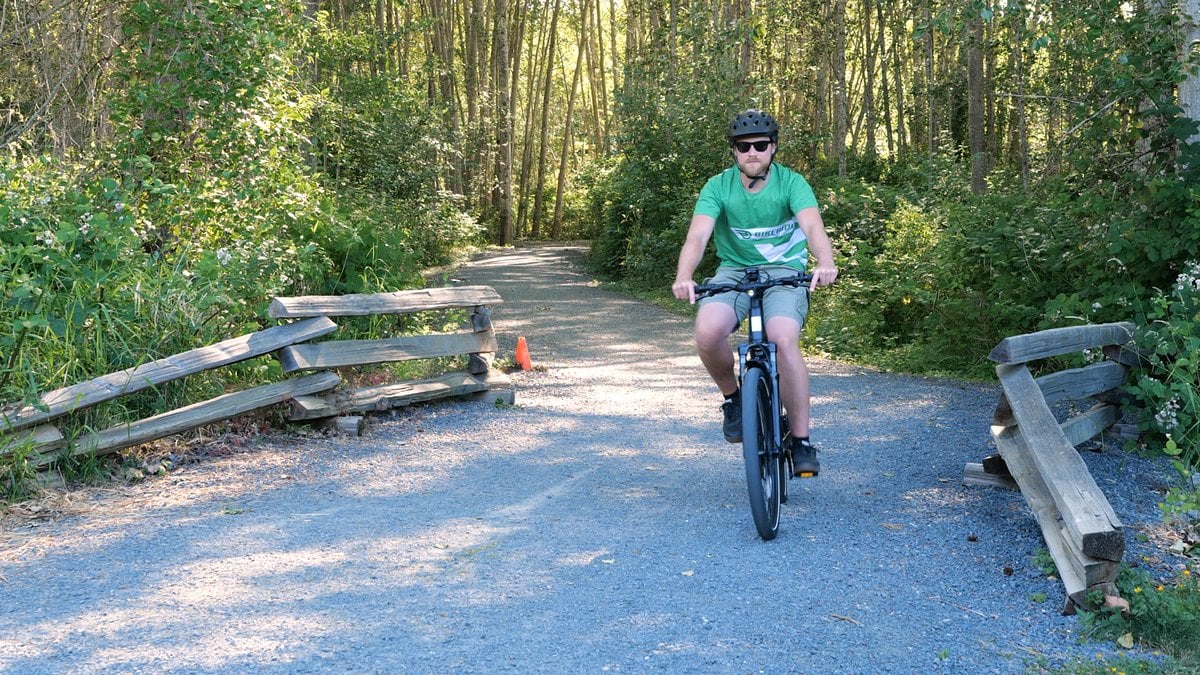
The first thing you notice is how natural the power delivery feels: the Ultro S matches its output to your input, and with the wide range of the 10-speed CUES we could hold a steady cadence and get the most out of the mid-drive. The slightly forward-leaning but straight-backed position kept us comfortable through almost four hours on the range test.
Stability at top speed
RatedOn our stability run we ride straight at top speed, shift our weight, and shake the bike to see whether a wobble starts. The no-hands check is done separately, at lower speed on level ground, to see that it tracks straight.
Comfort, suspension, and vibration
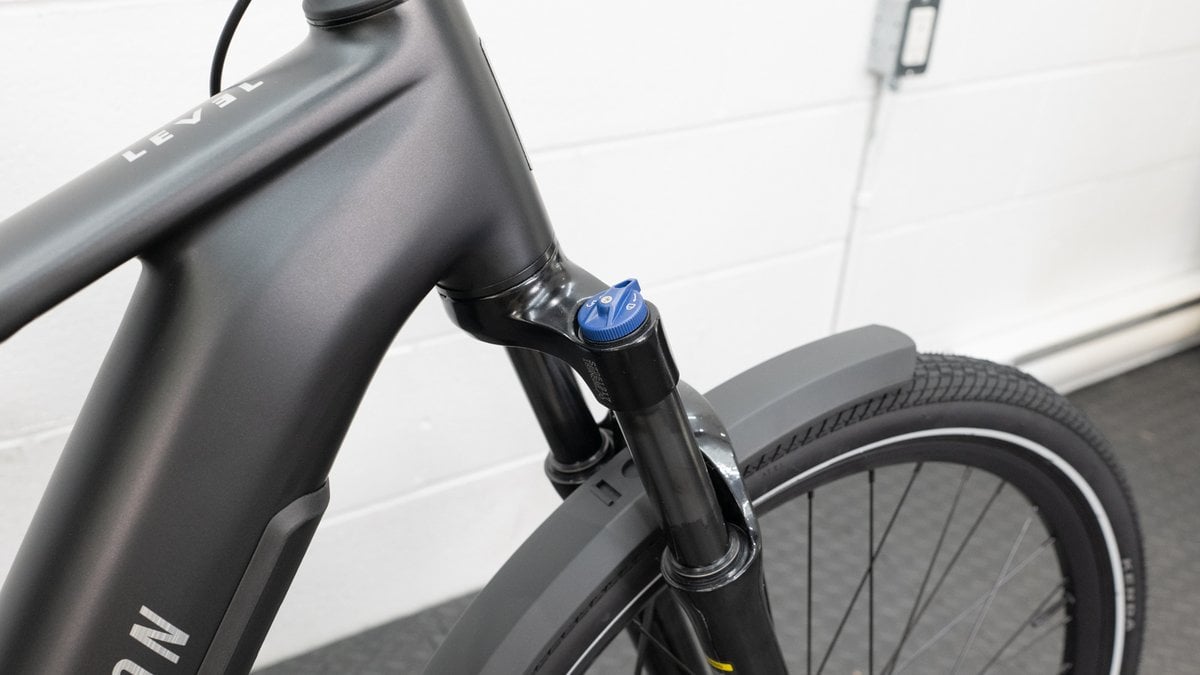
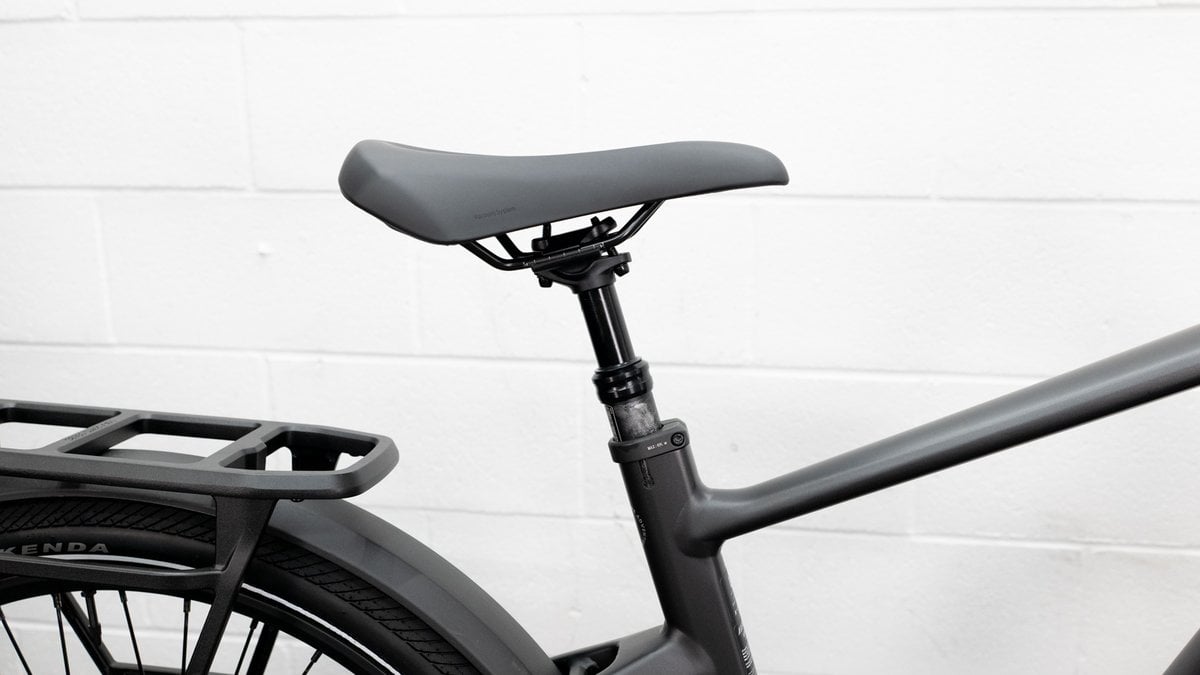
RatedSuspension comes from a basic 100 mm coil fork with preload adjustment and a lockout, plus a 50 mm suspension seatpost under the Aventon saddle. The seatpost takes the sting out of rough pavement. The fork is stiff and slow to respond, and we hoped for better on a bike at this level.
Riding position
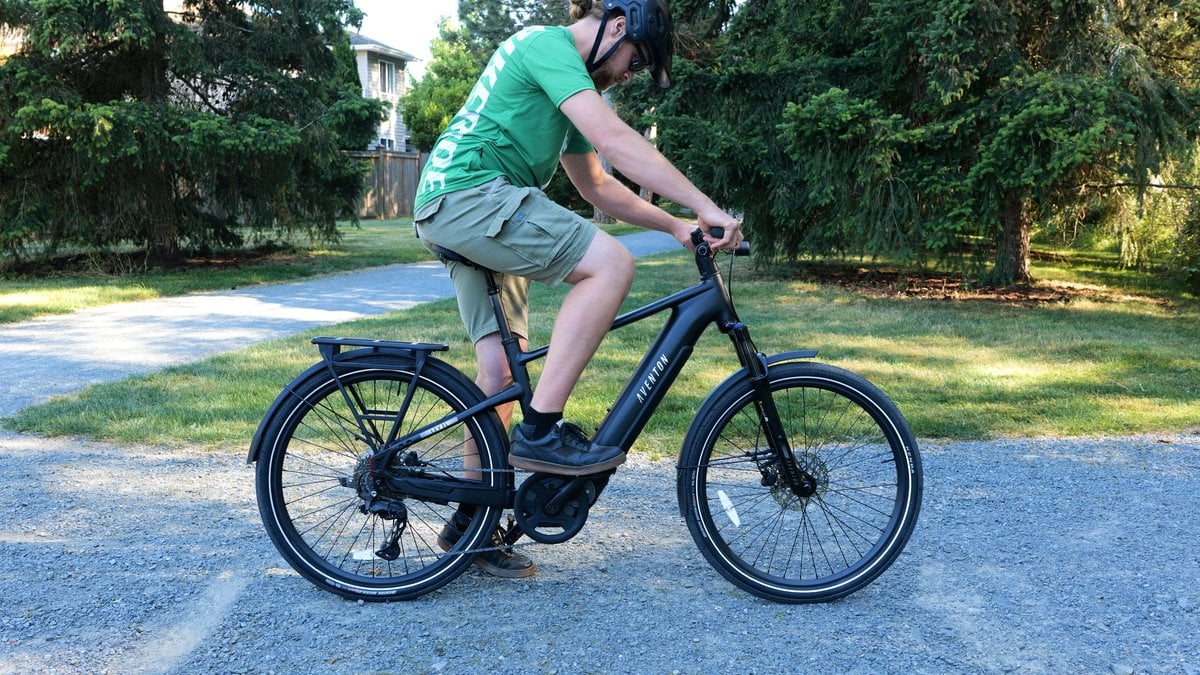
DescriptorWhere the ADV sits on the spectrum from fully upright to fully aggressive. The 680 mm bar with a 30 mm rise gave us a slightly forward-leaning but straight-backed position:
Fit and Sizing
2 measurements · 2 checks · 2 ratingsTrue to size?
VerdictAventon makes the step-over ADV in three sizes, and the size L we tested is listed for riders from 5'10" to 6'4", a 6-inch span served by 7 inches of saddle-height adjustment (35" to 42" from the ground, measured on our test bike). By our rule of thumb that span is likely. At 6'0" with a 33" inseam we found the bike fit well.
| Measurement | Aventon claims | We found |
|---|---|---|
| Rider height range, size L | 5'10"–6'4" | 6'0" fits well; the ends of the range untested |
| Saddle height, ground to top of saddle | — | 35"–42" (889–1,067 mm), 7" of adjustment, measured on our test bike |
| Fits our tester (6'0", 33" inseam) | Inside the claimed range | Yes, comfortably |
| Claimed height range accuracy | 6" span on 7" of travel | (6 − 2) ÷ 7 = 0.6×, inside our 2.0× limit |
| Standover | 29.3" (743 mm) | As published |
| Our verdict | Size L fits 5'10"–6'4" | Plausible |
Cockpit adjustability
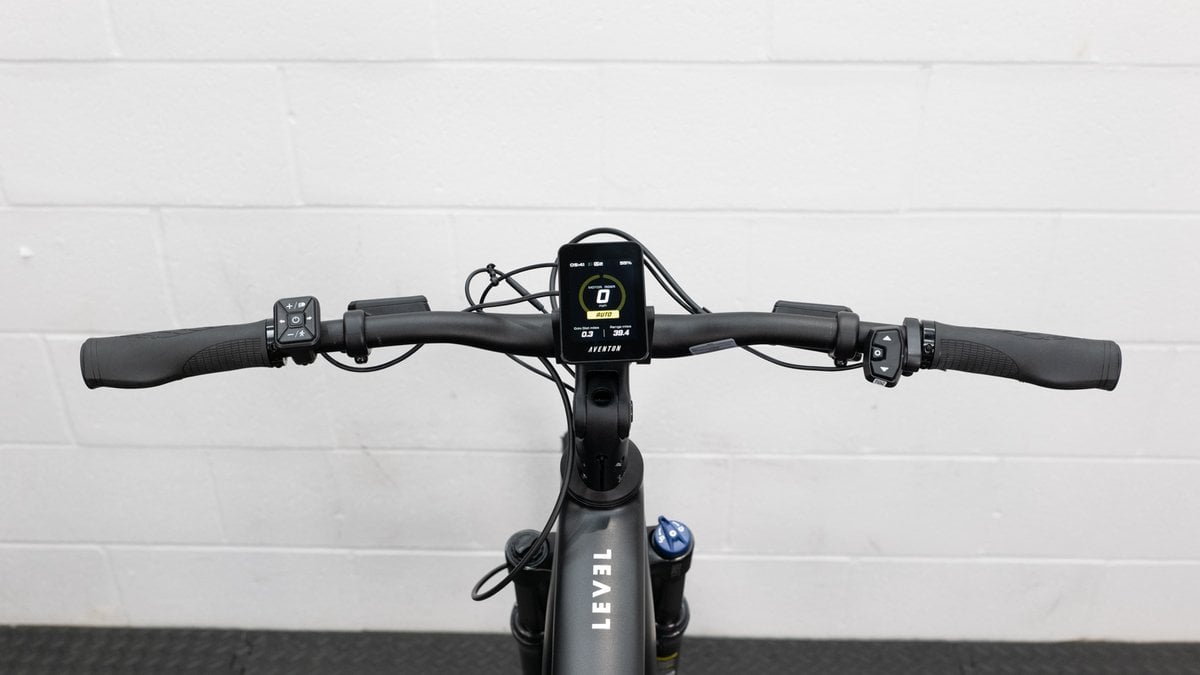
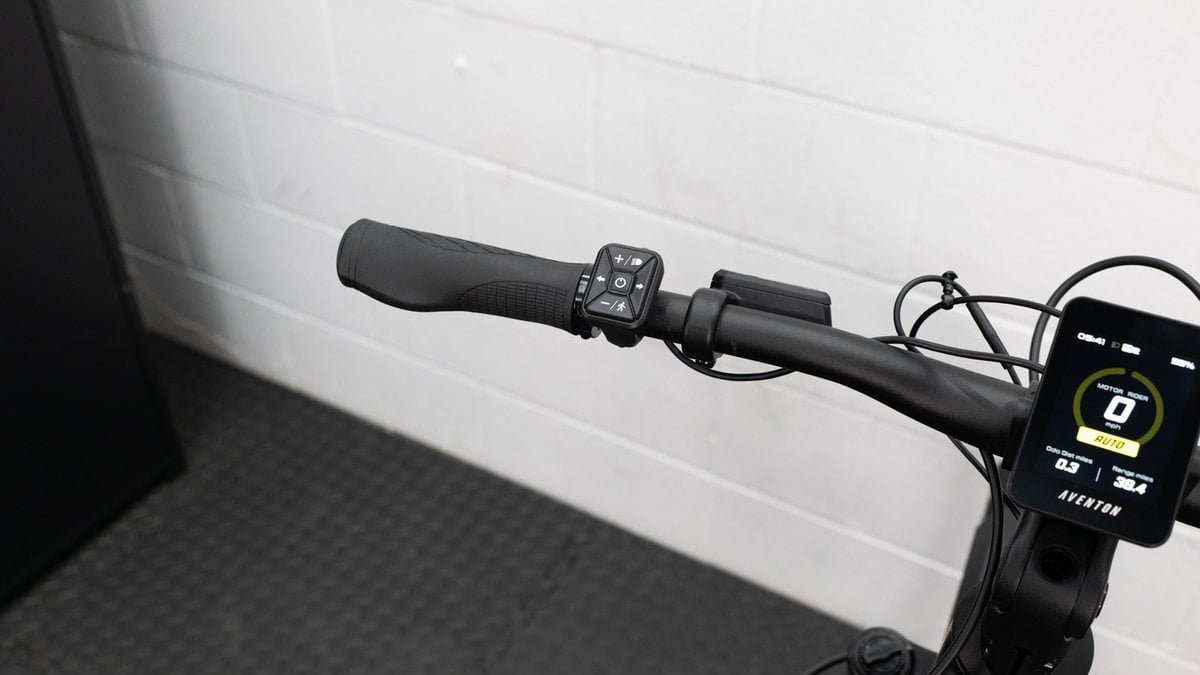
RatedThe 680 mm bar has a 30 mm rise and carries the A280 display in the middle, the control pad on the left grip, and the electronic shifter on the right. With the saddle set for a 33" inseam, we had a slightly forward-leaning, comfortable position.
Build and Components
1 test · 6 ratings · factsWeight, verified
MeasuredAventon lists the ADV at 61 lb. Our scale read 65.4 lb as shipped, 7.2% over the claim. That is still second-lightest in this comparison group and 0.5 lb under the 65.9 lb average of the commuter e-bikes we have weighed. Aventon rates the payload at 300 lb.
Frame, finish, and integration
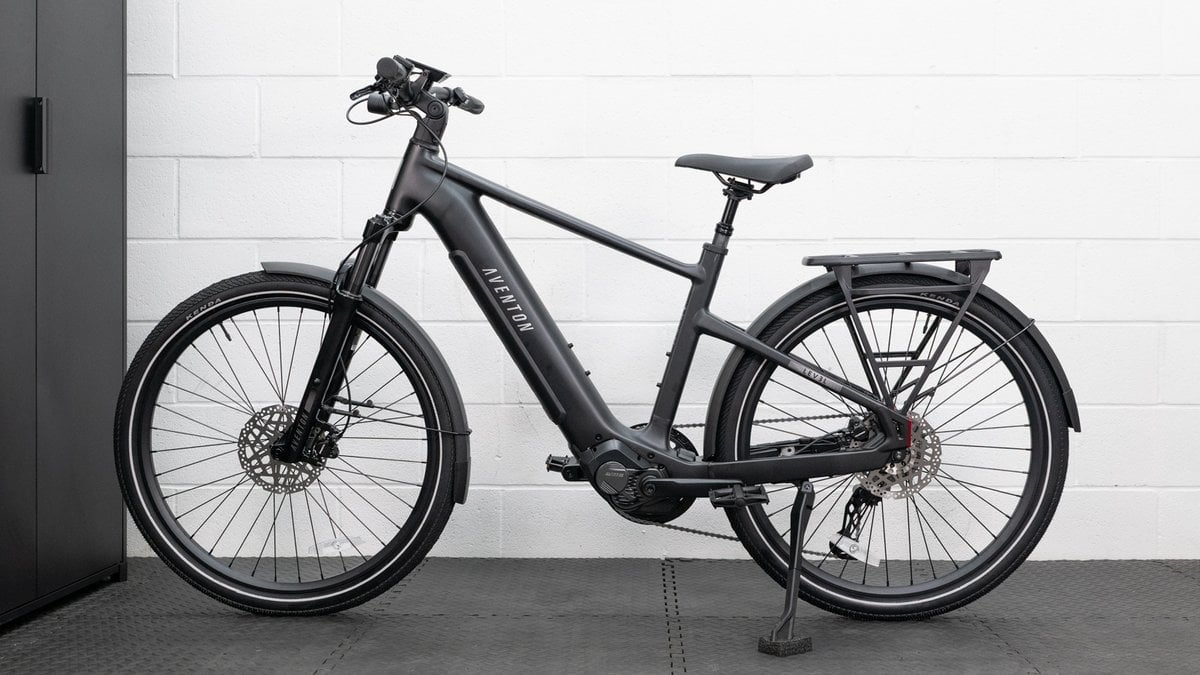
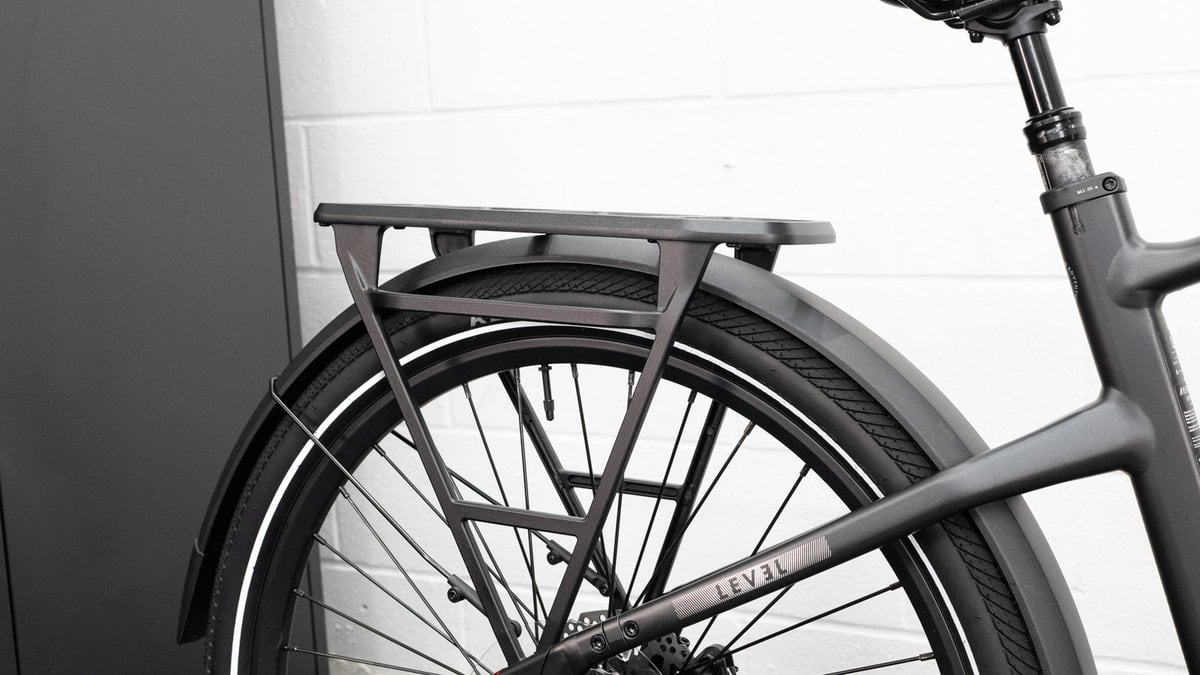
RatedThe 6061 aluminum frame comes as a step-over in three sizes or a step-through in two, with the battery inside the down tube and the cables routed internally. We tested the size L step-over. The fenders, rack, and lights are fitted at the factory, and the whole bike felt solid and well put together.
Drivetrain and shifting
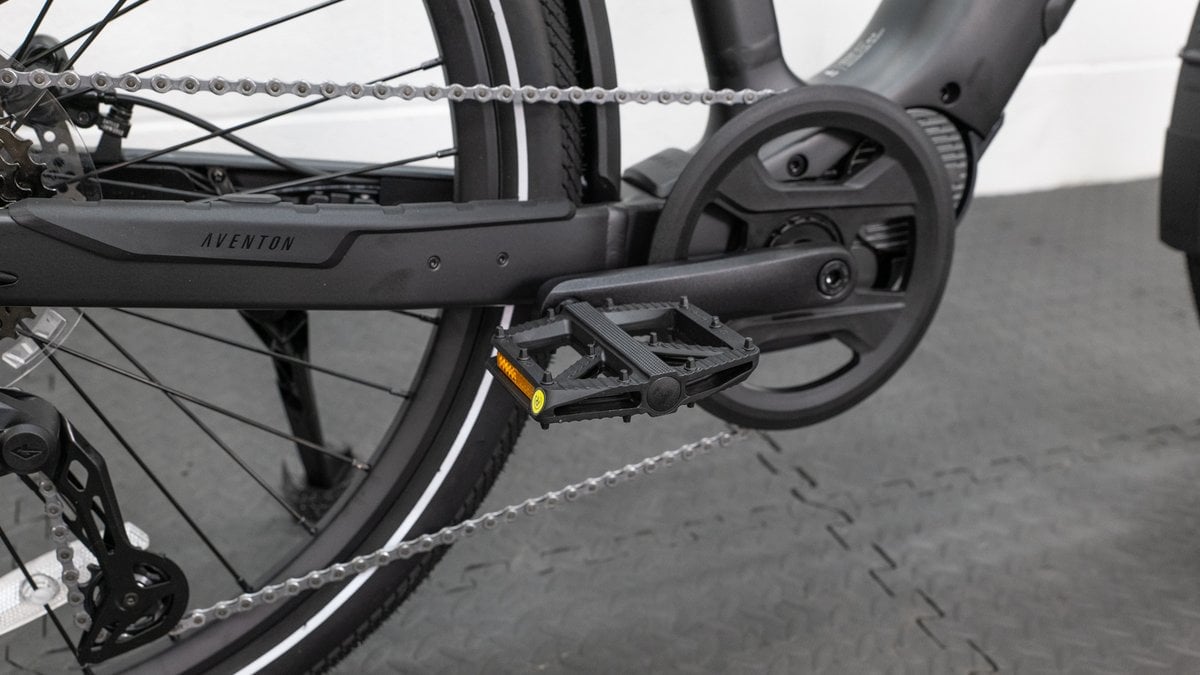
RatedShifting is handled by a 10-speed Shimano CUES derailleur with an electronic shifter and AutoShift, plus a 48t chainring and an 11–39t cassette. AutoShift was quick and clean on flats and rolling terrain. On steep climbs it was slower than we would like and sometimes a gear away from our preferred cadence, so there we shifted manually. Stopping comes from Tektro HD-M3120 two-piston hydraulic discs with 180 mm rotors.
Tires and accessories
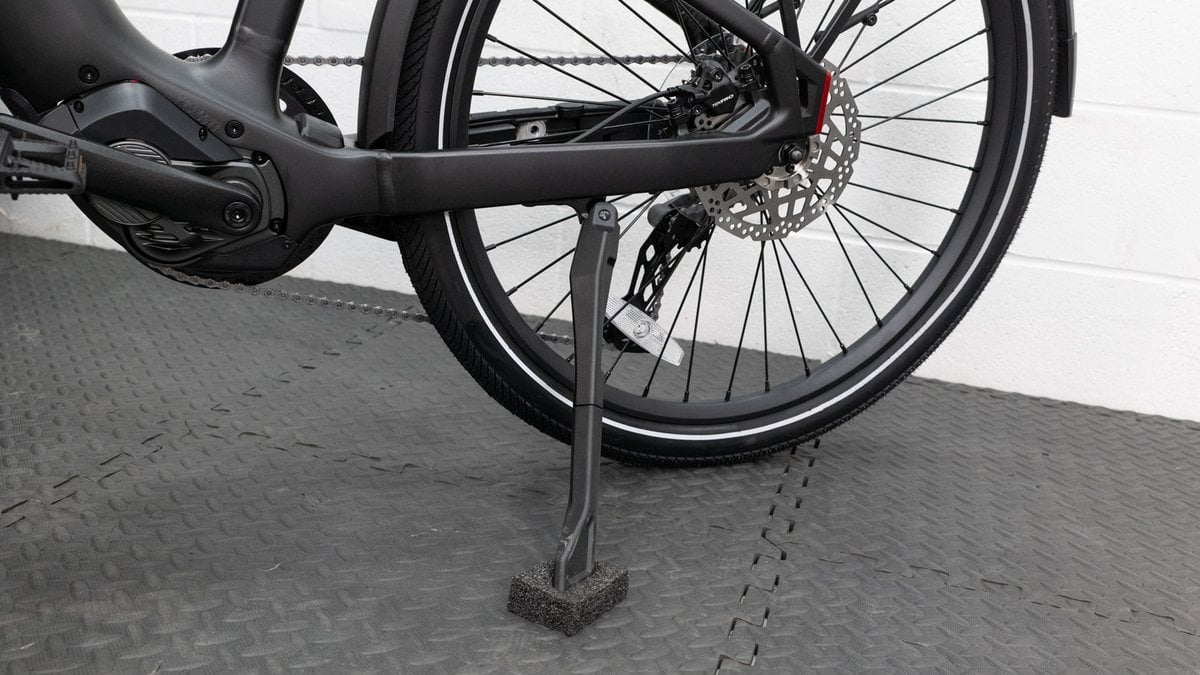
RatedThe 27.5×2.2" Kenda K1052 tires sit on double-wall aluminum rims with 36 spokes. Included are full-coverage fenders, a rear rack rated for 59 lb, a kickstand, and the integrated lights with turn signals. There is no brake light.
Display, Controls, and App
3 ratings · factsDisplay and controls
RatedThe Aventon A280 display is mounted centrally, and it is bright, clear, and easy to read in direct sunlight. The control pad sits on the left grip and the electronic shifter on the right, and the display's settings hold AutoShift and the rear-wheel lock. During the range test the display's estimate ran a little optimistic, showing around 62 miles for most of a ride that ended at 58.01.
Companion app
RatedThe Aventon app paired quickly. Ride Tune gives full control of each assist level, the speed limits, and the Auto mode and AutoShift settings, and a throttle can be added, sold separately. Aventon's ACU smart features (GPS tracking, geofencing, the rear-wheel lock, and a remote phone lock) are free for the first year and need a subscription after that.
Ownership, Practicality, and Value
1 test · 6 ratings · factsAssembly and setup
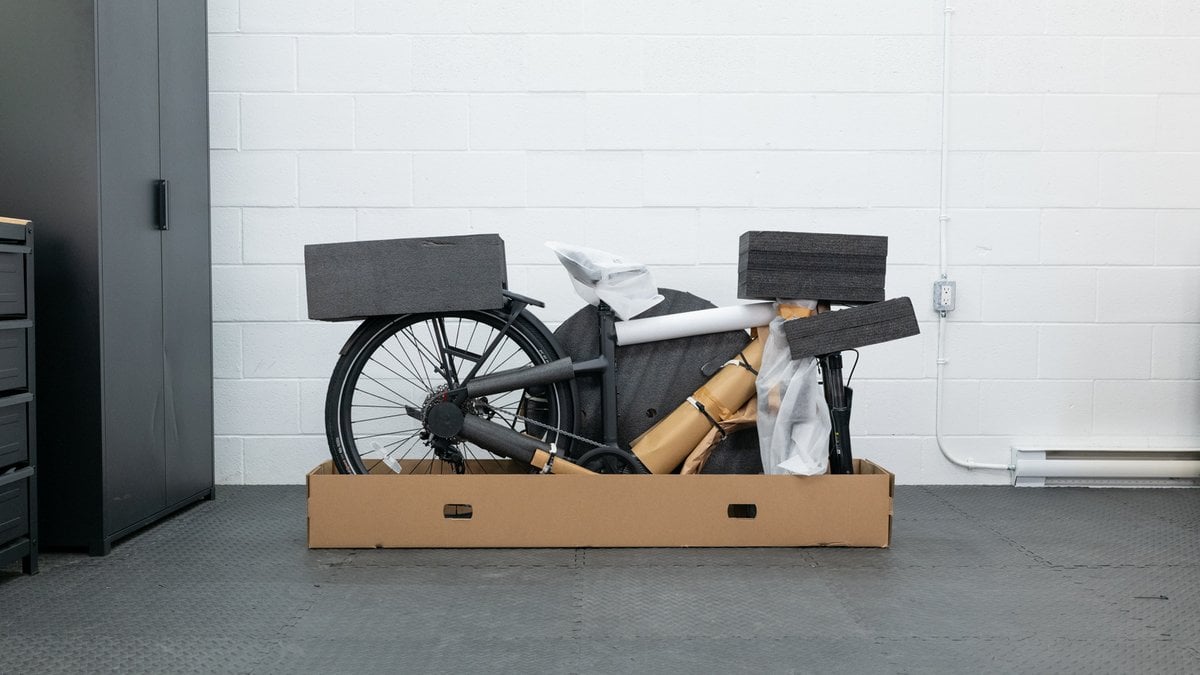
RatedThe ADV arrived almost ready to ride: we attached the bars, front wheel, and pedals, and charged the battery. Aventon includes the instruction manual and the tools. Our factory audit found no issues.
Support response, tested
MeasuredEvery brand we review gets the same test. We send one short, everyday support question through the brand's public support channel, from a regular customer account with no BikeRide affiliation, so the test is equal for everyone. We then time how long the first useful reply takes, counting weekday hours only. For Aventon the first useful answer arrived after half an hour, far quicker than the 18.1-hour average across the brands we have tested.
Serviceability and parts ecosystem
RatedThe mechanical side is standard: a Shimano CUES 10-speed drivetrain, Tektro hydraulic brakes, and 27.5" tires in a common size. The Ultro S motor, the battery, and the display are Aventon's own. Aventon covers the bike with a two-year warranty and the frame for life.
Component level for the price
RatedA mid-drive with 100 Nm, an 800 Wh UL-certified battery, a 10-speed CUES with electronic AutoShift, hydraulic discs, a bright display with 4G and GPS, and a full set of commuter accessories. The basic coil fork is the one component that falls short of the rest.
Value for money
RatedWeighing everything we measured against the price at the time of publication: the longest range in our comparison group, the quietest motor we have measured, 6 seconds to 20 mph, automatic shifting and assist that work well, and every commuter accessory but a brake light. Against that, a basic fork and a higher weight than claimed. The Level 4 ADV made a strong case for its value.
Full test results
Every measurement from this review in one table, against the average of similar bikes and the average of all 90 e-bikes we have tested.
| Test | Aventon Level 4 ADVThis bike | Average of similar bikesSimilar | BikeRide averageAll bikes |
|---|---|---|---|
| Motor and performance | |||
| 0–20 mph, max pedal assistvs. 7 other mid-drive e-bikes | 6.0 s | 7.3 s | 8.4 s |
| Gradual hill climb, 20 mph capvs. 5 other mid-drive e-bikes | 3:10 | 3:13 | 3:18 |
| Steep hill climbvs. 5 other mid-drive e-bikes | 2:32 | 2:49 | 2:36 |
| Motor noise @ 20 mph, unloadedvs. 16 other e-bikes | 48.0 dB(A) | 66.6 dB(A) | 66.6 dB(A) |
| Assist engagement delayvs. 15 other e-bikes | 0 crank rev | 0.2 crank rev | 0.2 crank rev |
| Range and charging | |||
| Range (medium assist, the ADV in Auto mode)vs. 13 other commuter e-bikes | 58.01 mi | 41.8 mi | 39.2 mi |
| Range vs claimedvs. 21 other commuter e-bikes | 53% | 60% | 55% |
| Efficiency (medium assist)vs. 13 other commuter e-bikes | 13.8 Wh/mi | 16.6 Wh/mi | 19.2 Wh/mi |
| Charge time 0→100%vs. all e-bikes tested | 5.5 h | 6.3 h | 6.3 h |
| Braking and safety | |||
| Brake test, 20–0 mphvs. 22 other commuter e-bikes | 20.5 ft | 19.9 ft | 19.3 ft |
| Headlight @ 15 ftvs. 16 other e-bikes | 460 lux | 579 lux | 579 lux |
| Build and ownership | |||
| Measured weightvs. 19 other commuter e-bikes | 65.4 lb | 65.9 lb | 74.6 lb |
| Battery weightvs. 13 other e-bikes | 9.2 lb | 11.7 lb | 11.7 lb |
| Support response, tested (weekday hours)vs. 31 other brands | 0.5 h | 18.1 h | 18.1 h |
Similar bikes: mid-drive e-bikes for acceleration and the climbs; commuter e-bikes for range, efficiency, braking, and weight; all e-bikes for the other rows; support is averaged per brand. Range and efficiency compare our Auto-mode run with medium-assist runs. Charge time is calculated from charger output and battery capacity. Not run on the ADV: a maximum-assist range test, GPS top speed, speedometer accuracy, and a timed assembly.
Detailed specs
As published by Aventon for the Level 4 ADV step-over we tested, with component details from our tester's notes. Values we verified in testing are covered in Claimed vs. measured.
| Electric bike class | Class 1 as shipped, Class 2 or 3 in the app (see Speed settings) |
|---|---|
| Motor | Aventon Ultro S mid-drive, 250W nominal, 750W peak |
| Max torque | 100 Nm (claimed) |
| Battery | 36V 20Ah (800 Wh) as listed, Samsung cells, removable, the label on ours reads 22Ah |
| Range claimed | Up to 110 miles (Eco mode, 165 lb rider, flat pavement) |
| Top speed | 20 mph as shipped, 28 mph in Class 3 (claimed, not GPS-verified) |
| Throttle | None fitted, sold separately |
| Pedal assist | Eco, Sport, Turbo, and Auto, tunable in the app (Ride Tune) |
| Sensor | Dual-sided torque sensor |
| Charger | 42V 4A |
| Charge time | 5 hours claimed, 5.5 hours calculated |
| Display | Aventon A280 |
| Certification | UL 2849 (electrical system) and UL 2271 (battery) |
| Water/dust rating | IPX6 bike, IP67 motor |
| Warranty | 2 years, lifetime frame warranty with registration |
| Smart features | 4G and GPS tracking, geofencing, display-activated rear-wheel lock, remote phone lock, activity alerts; subscription after the first year |
| Frame | 6061 aluminum, step-over (tested) in M, L, and XL or step-through in two sizes |
|---|---|
| Fork | 100 mm coil suspension, preload adjustment and lockout, 15×100 mm thru-axle |
| Brakes | Tektro HD-M3120 two-piston hydraulic, 180 mm rotors |
| Drivetrain | Shimano CUES 10-speed, electronic shifter with AutoShift |
| Chainring / cassette | 48t / 11–39t |
| Rims / tires | 27.5" double-wall aluminum, 36 spokes / 27.5" × 2.2" Kenda K1052 |
| Handlebar | 680 mm, 31.8 mm, 30 mm rise |
| Grips | Aventon lock-on |
| Saddle | Aventon, on a 50 mm suspension seatpost |
| Pedals | Composite platform |
| Lights | Integrated headlight and taillight with turn signals, no brake light |
| Fenders | Full-coverage, included |
| Rear rack / kickstand | Rack rated for 59 lb and a kickstand, included |
| Payload capacity | 300 lb |
Geometry details
As published by Aventon for the size L. ✓ measured = Aventon doesn't publish this figure, so it's our own measurement. ✗ = Aventon's published figure is more than 3 mm from what we measured.
| Measurement | Size L (tested, claimed 5'10"–6'4") | |
|---|---|---|
| Seat tube | 19.0" (483 mm) | ✗ Aventon: 450 mm |
| Reach | 17.5" (445 mm) | As published |
| Stack | 25.7" (652 mm) | As published |
| Standover height | 29.3" (743 mm) | As published |
| Virtual top tube | 24.9" (632 mm) | As published |
| Head tube angle | 69° | As published |
| Seat tube angle | 74° | As published |
| Chainstay | 18.9" (480 mm) | As published |
| Wheelbase | 47.0" (1,195 mm) | As published |
| Saddle height, min–max | 35"–42" (889–1,067 mm) | ✓ measured |
Video review
Watch Scott's full 9-minute review of the Aventon Level 4 ADV, including footage from every test above, on BikeRide's YouTube channel.